
MY ARCHIVE
MY ARCHIVE
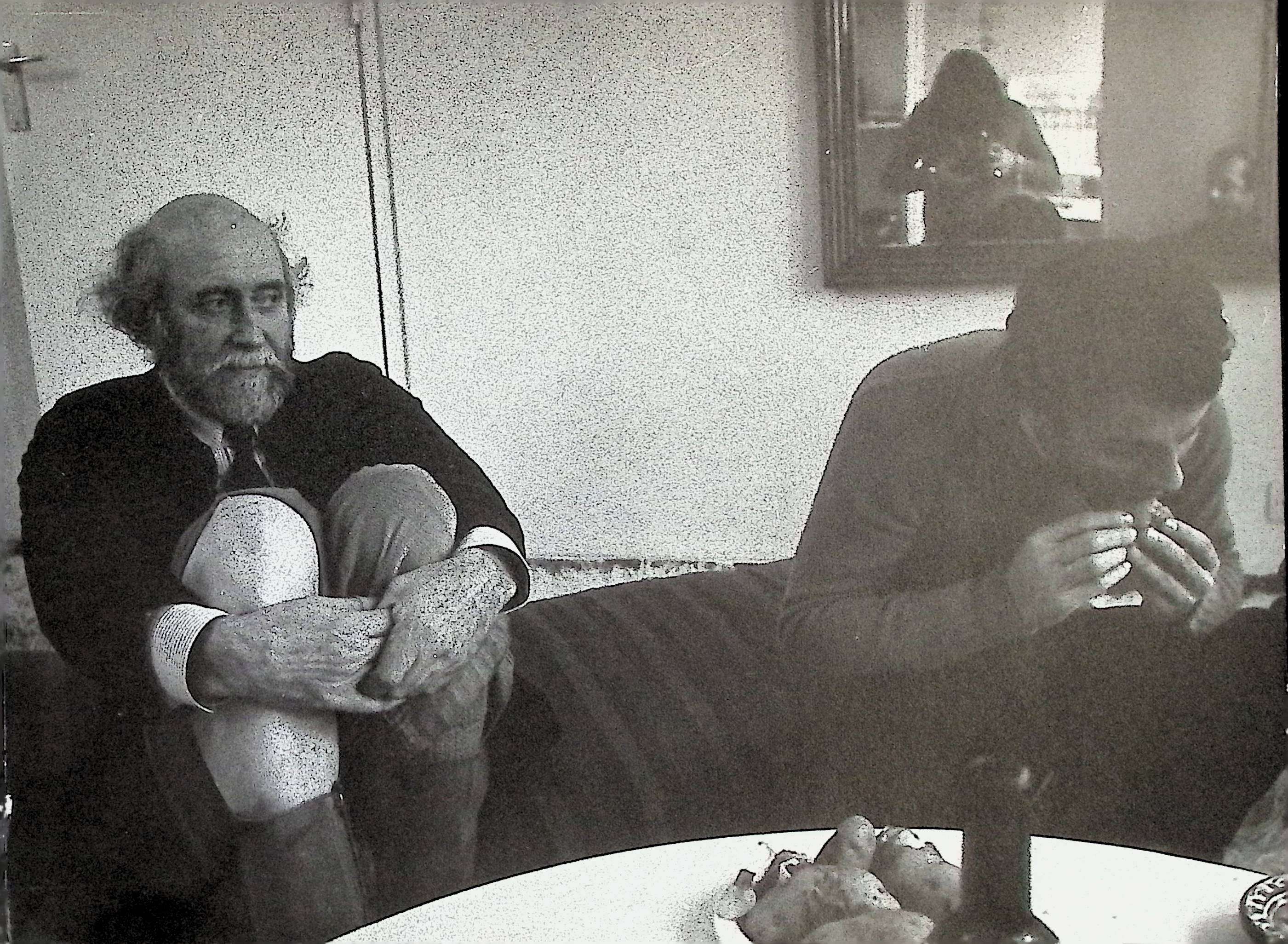
The composer with the painter Yiannis Tsarouchis.
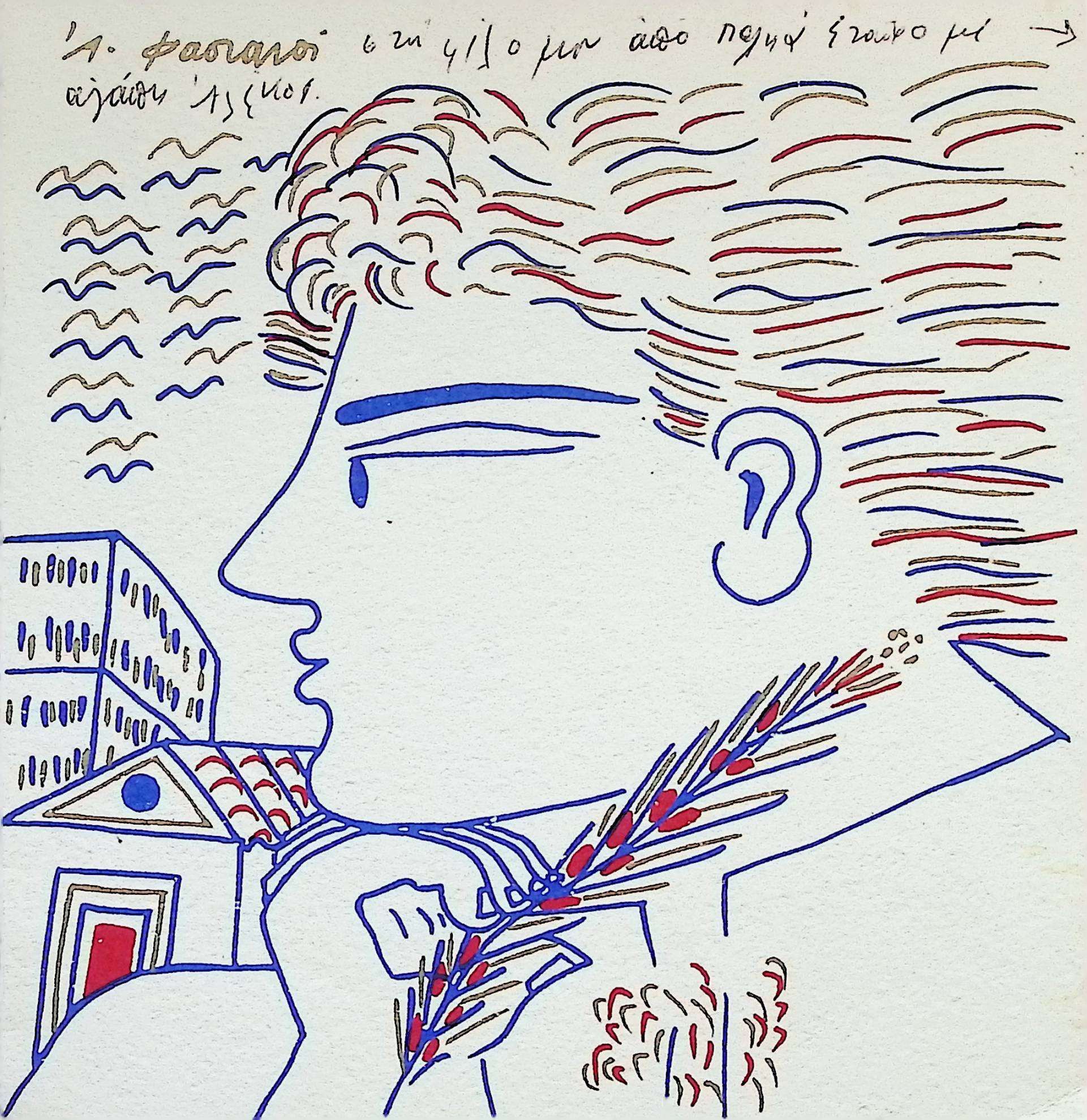
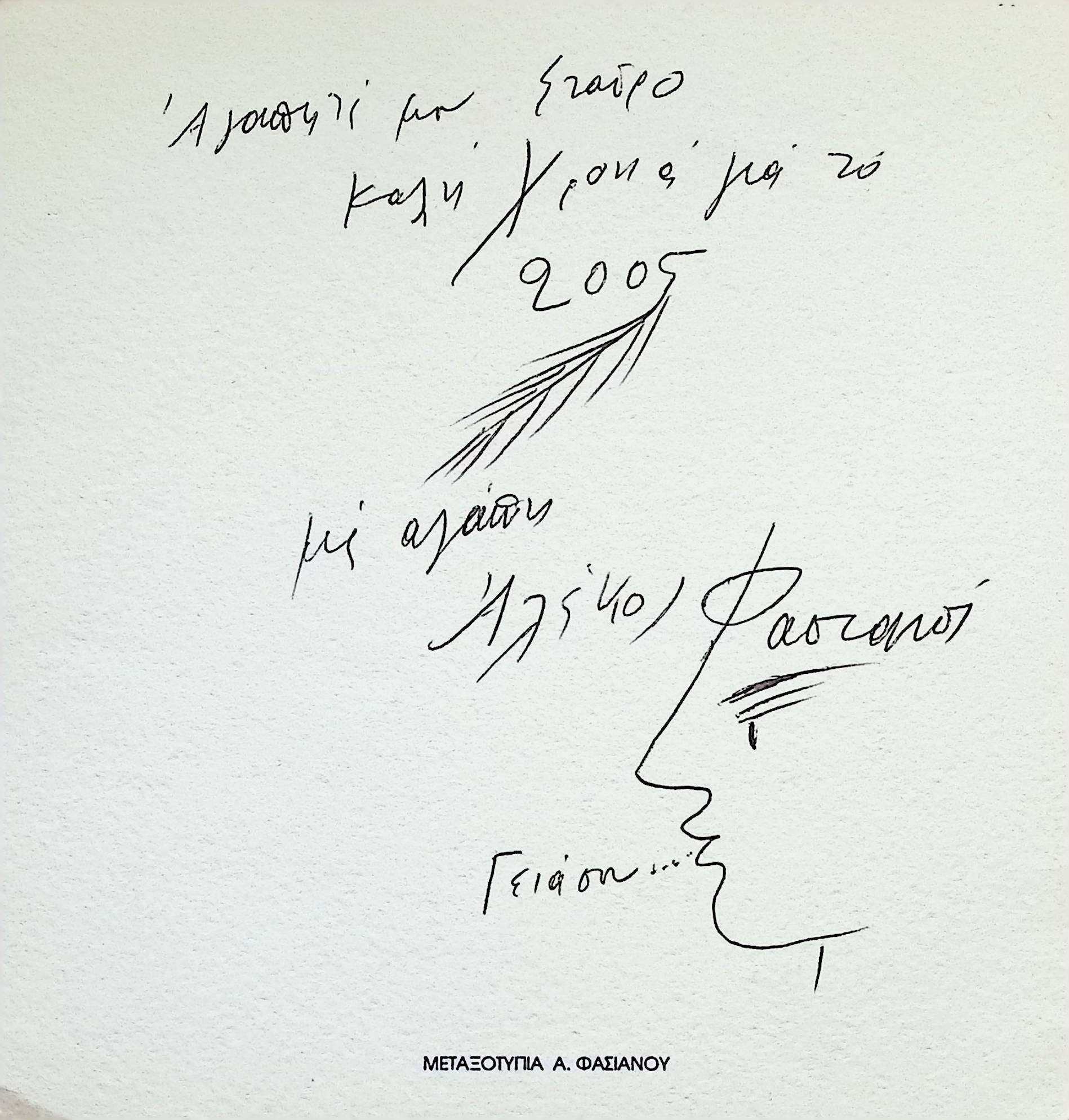
“Dear Stavros, Happy New Year for 2005. With love, Alekos Fassianos.”
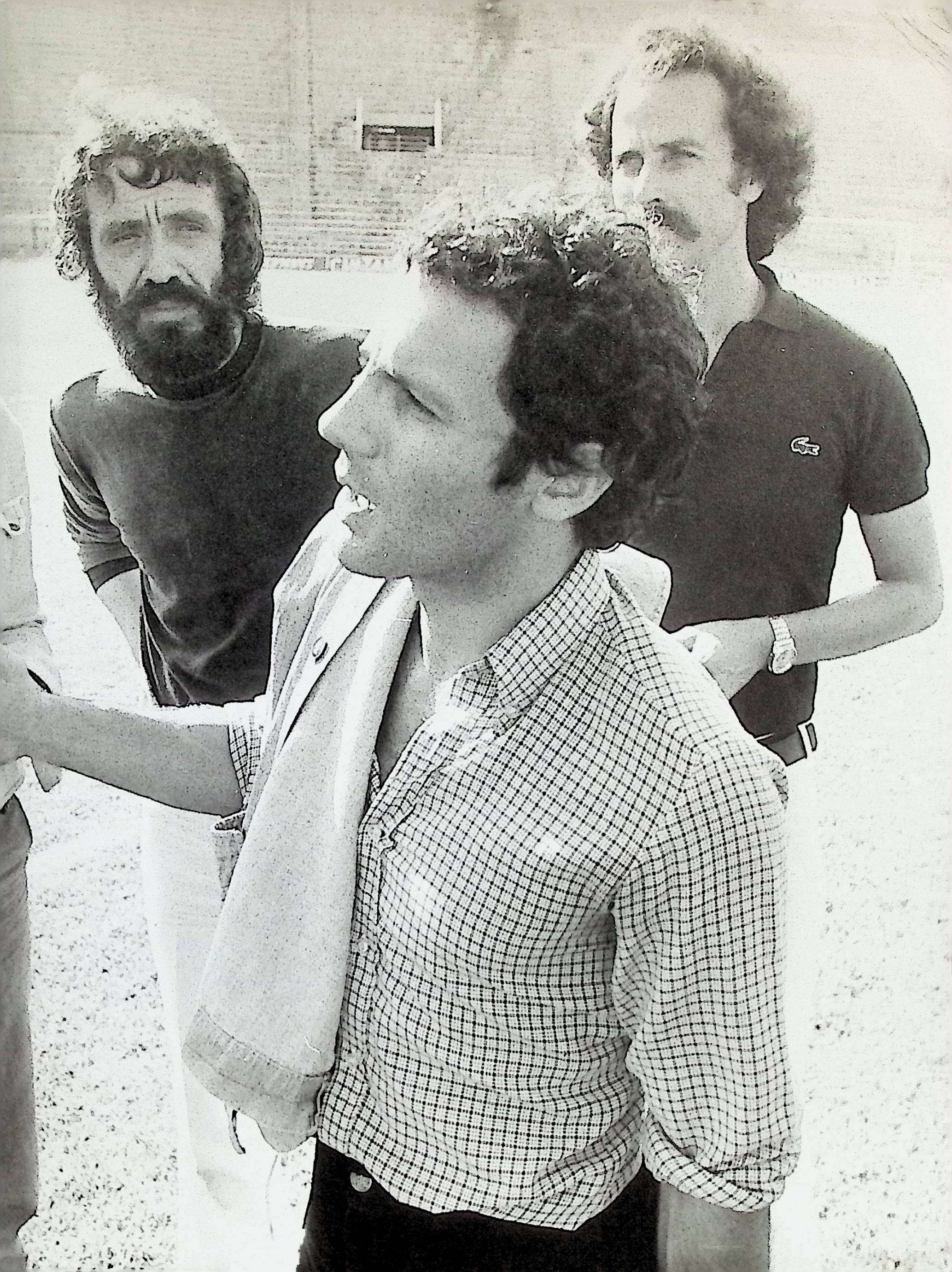
The camera lens captures the meeting of Stavros Xarchakos, Nikos Xylouris, and Antonis Kalogiannis.
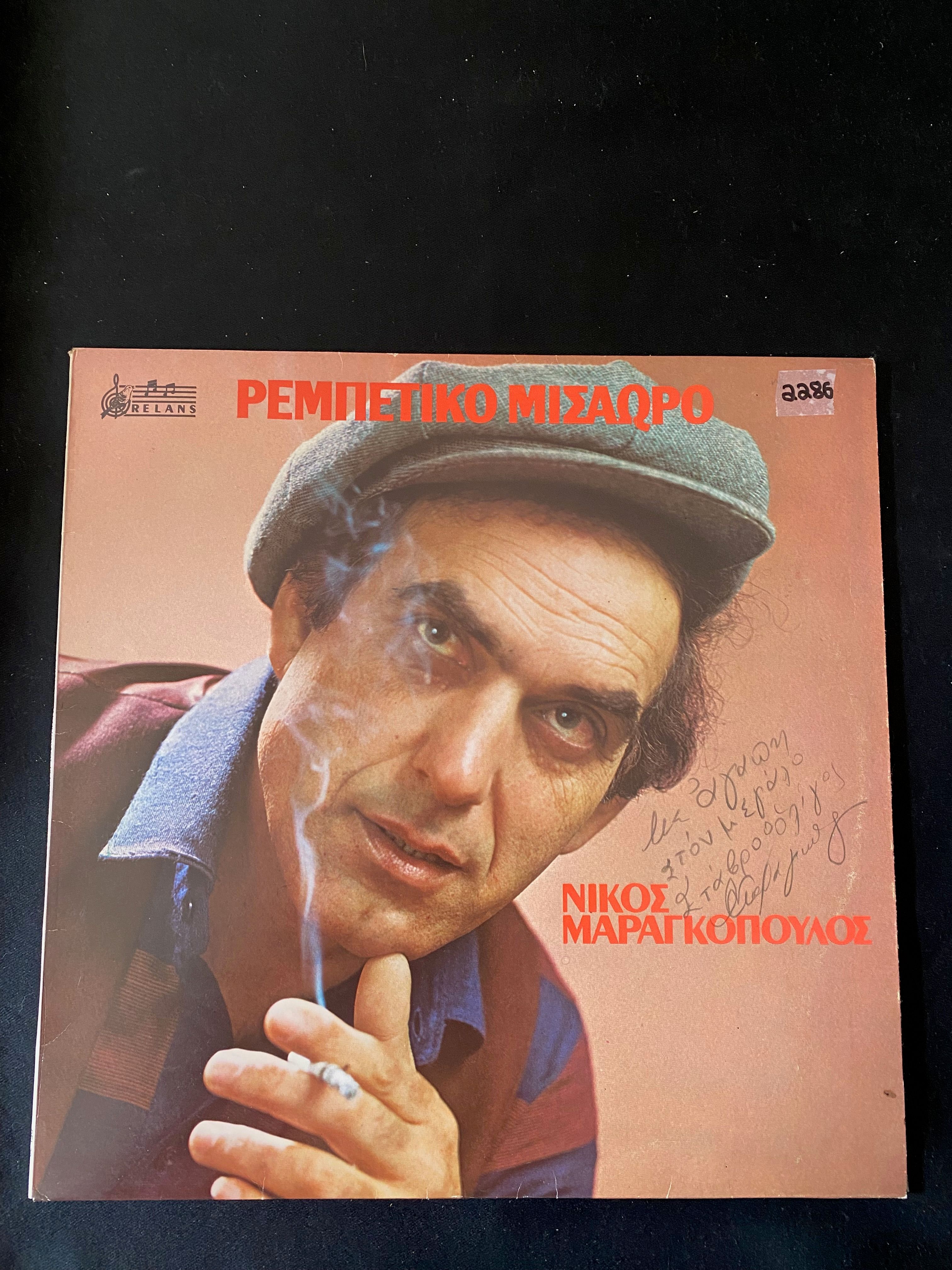
Handwritten "with love... the little one" Nikos Maragopoulos.
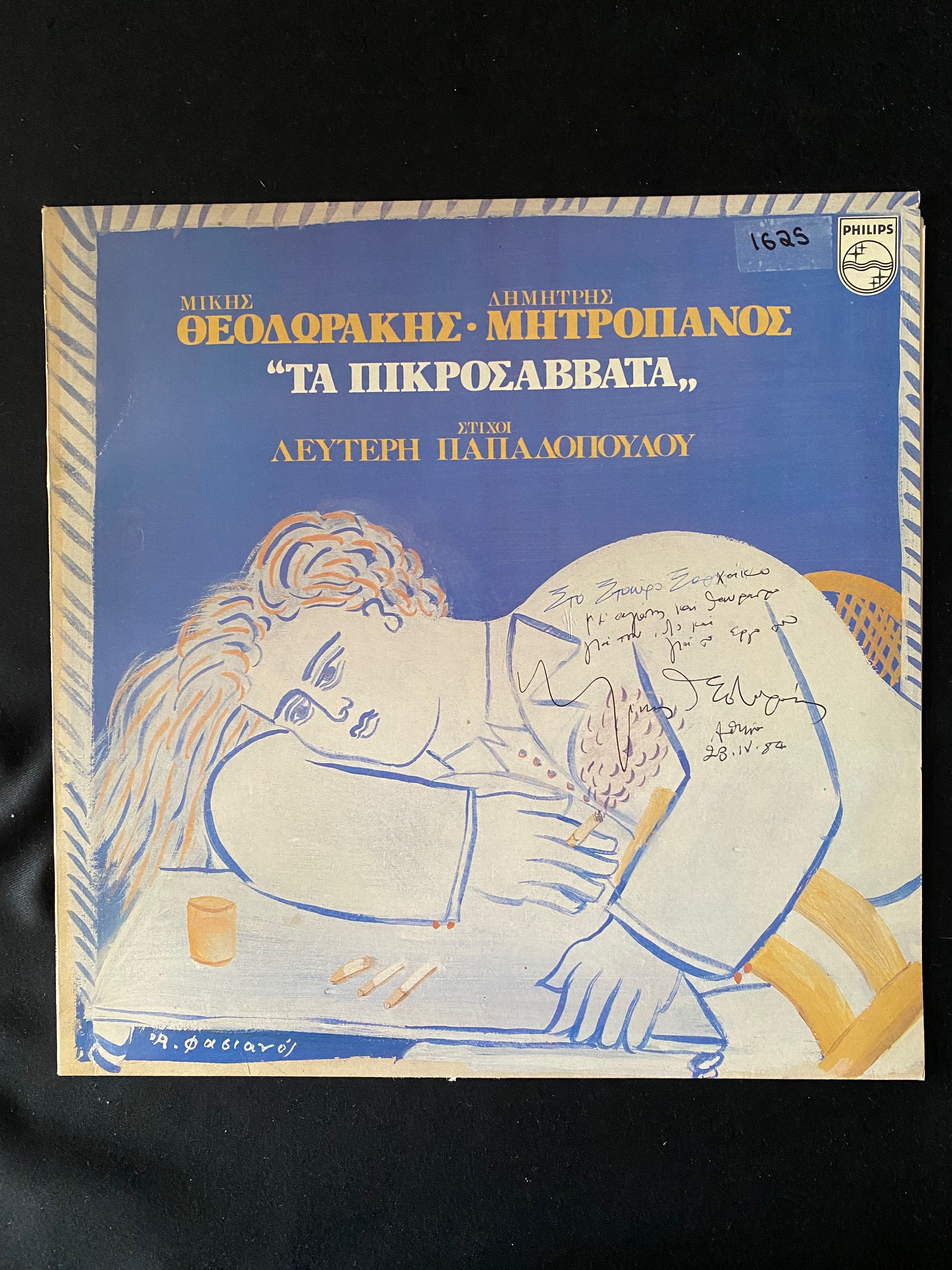
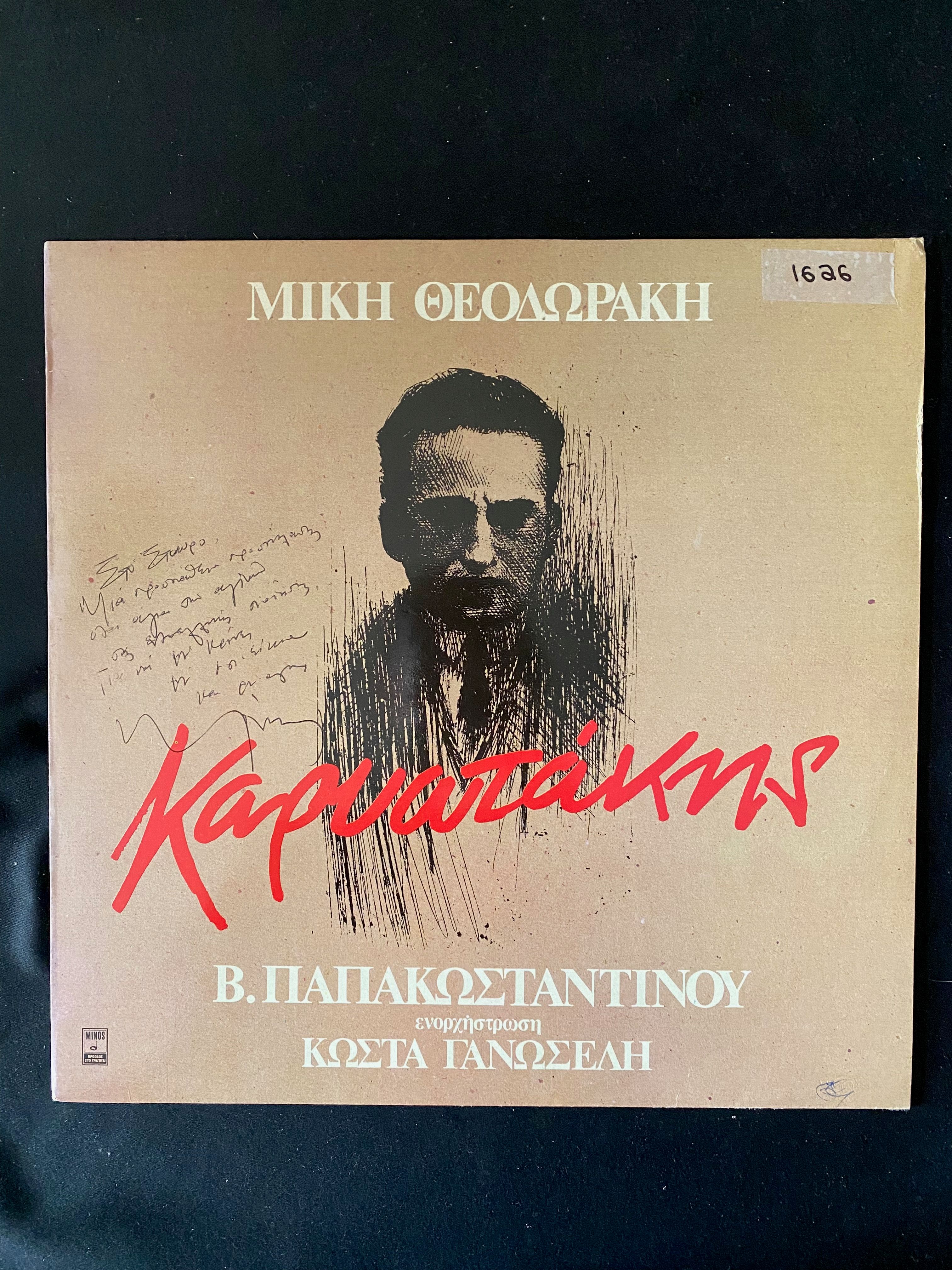
Handwritten by Mikis Theodorakis for Stavros Xarchakos, the man and the creator.
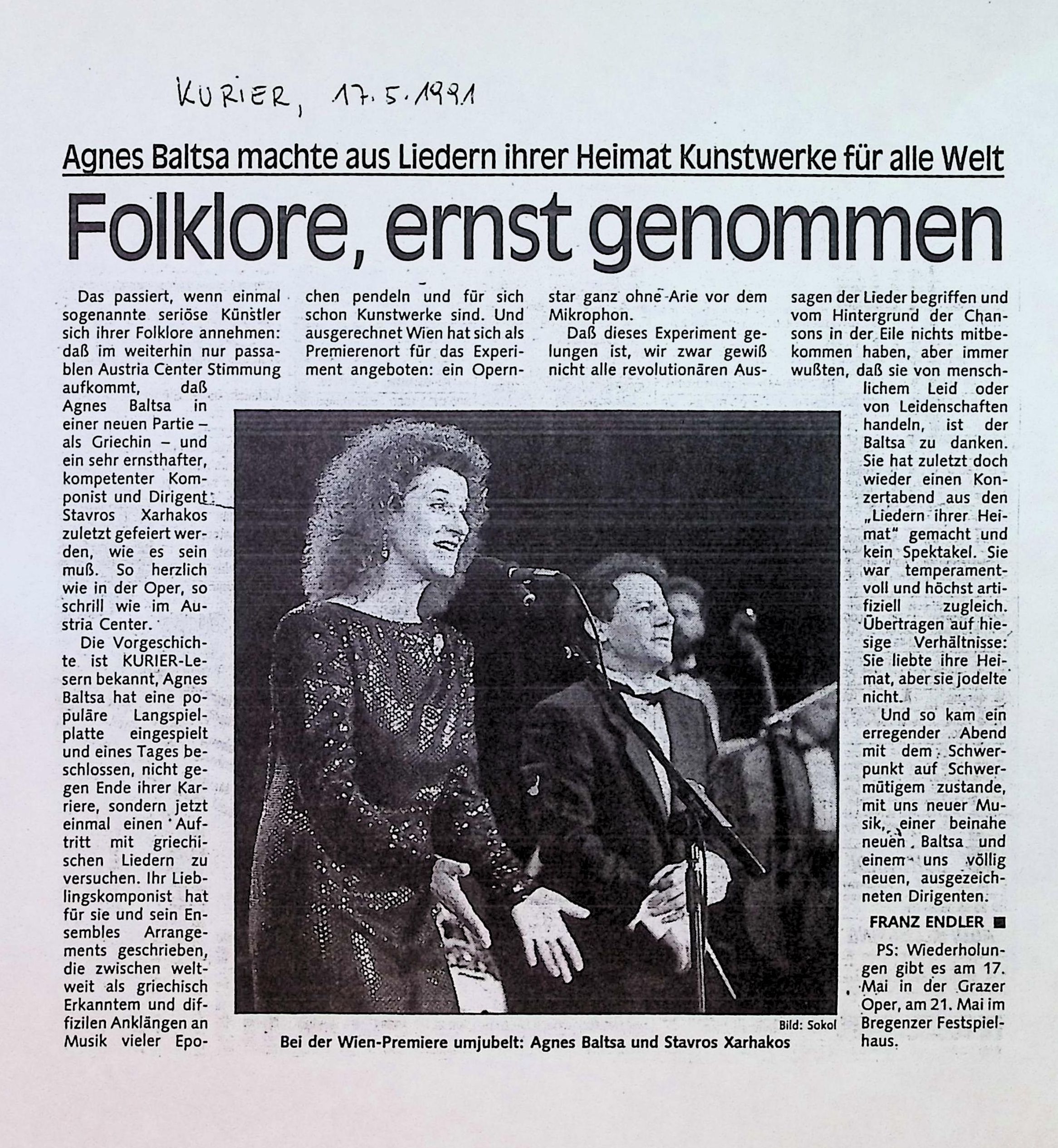
Agnes Baltsa and Stavros Xarchakos transform Greek tradition into high art in Vienna, a performance where Baltsa's voice and Xarchakos' orchestrations highlight folk music with respect, authenticity, and deep emotion. (KURIER article, 17/5/1991)
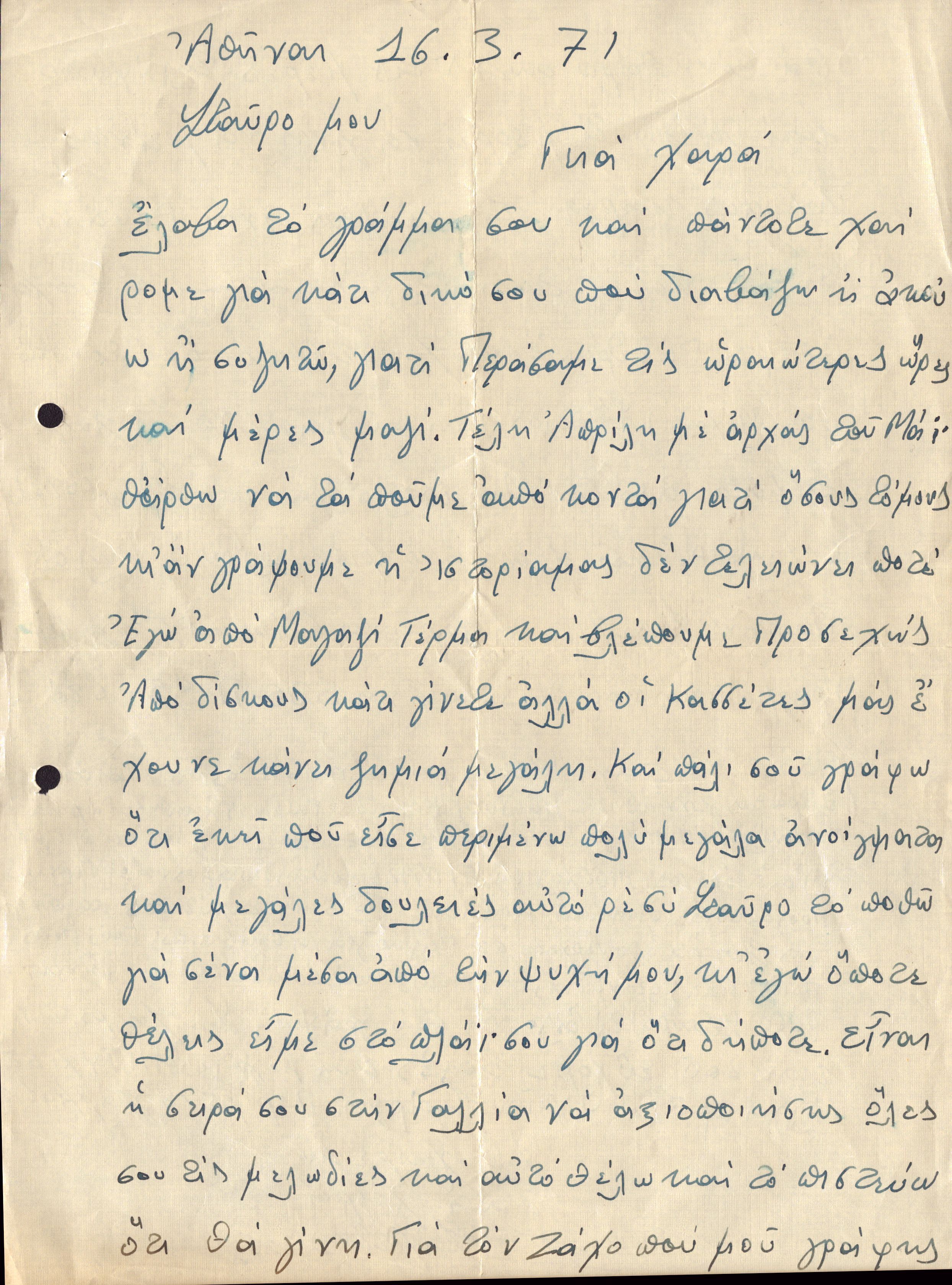
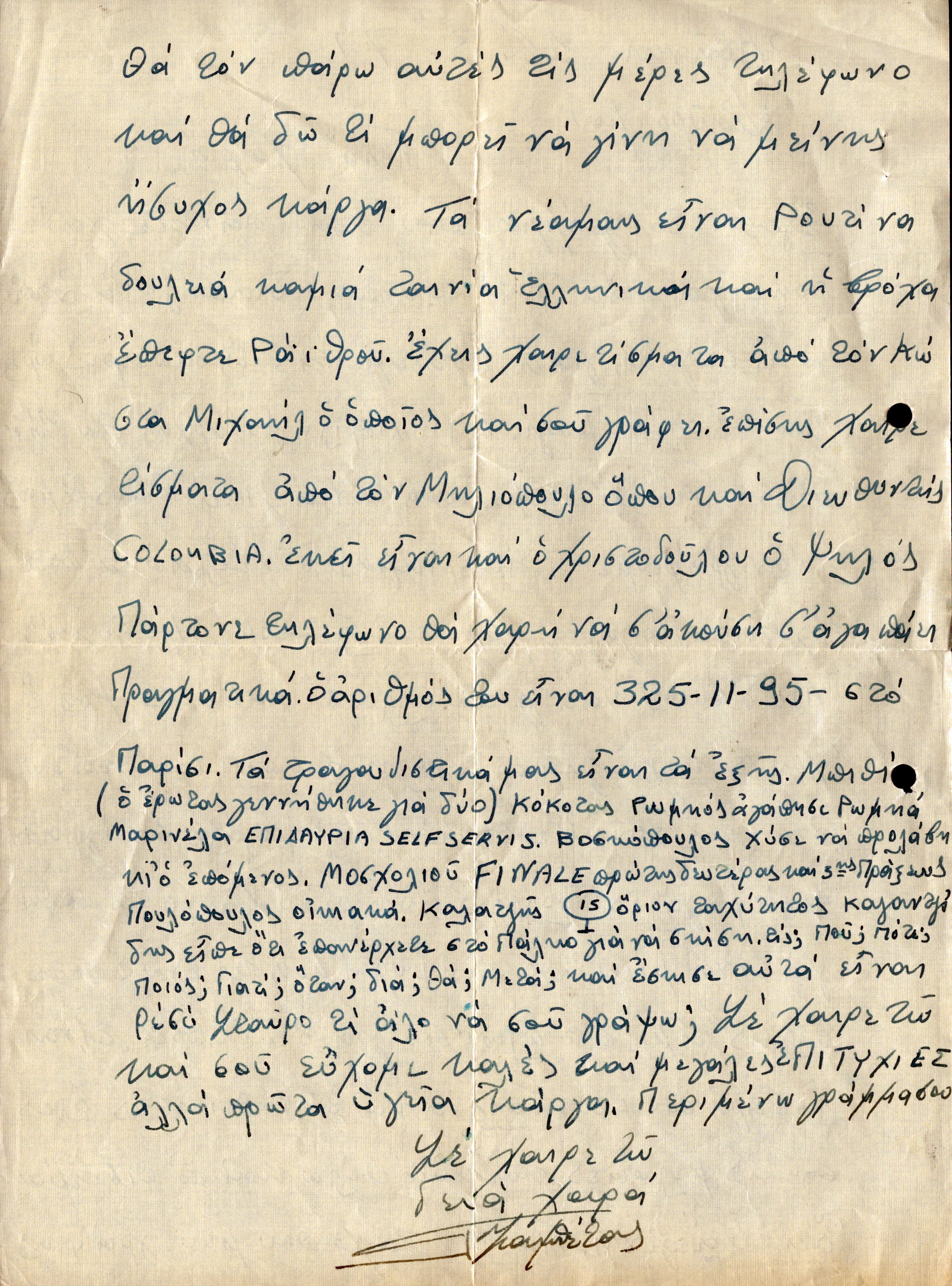
A letter from Giorgos Zampetas to Stavros Xarchakos, written in an especially warm and friendly tone, offering wishes for making the most of every opportunity in France, as well as for health and artistic success.
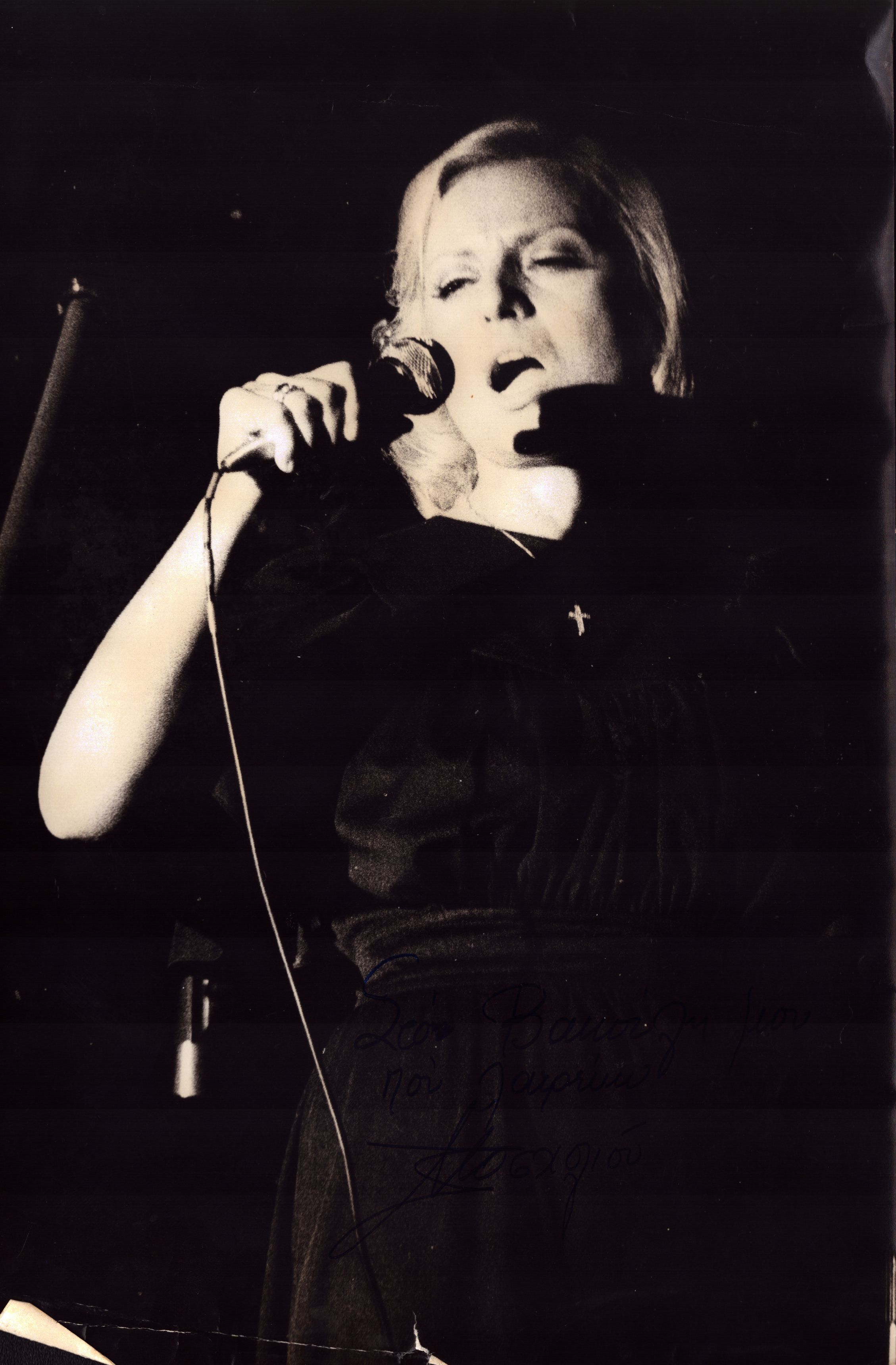
“To my Vakoulis, whom I adore. – Vicky Moscholiou”
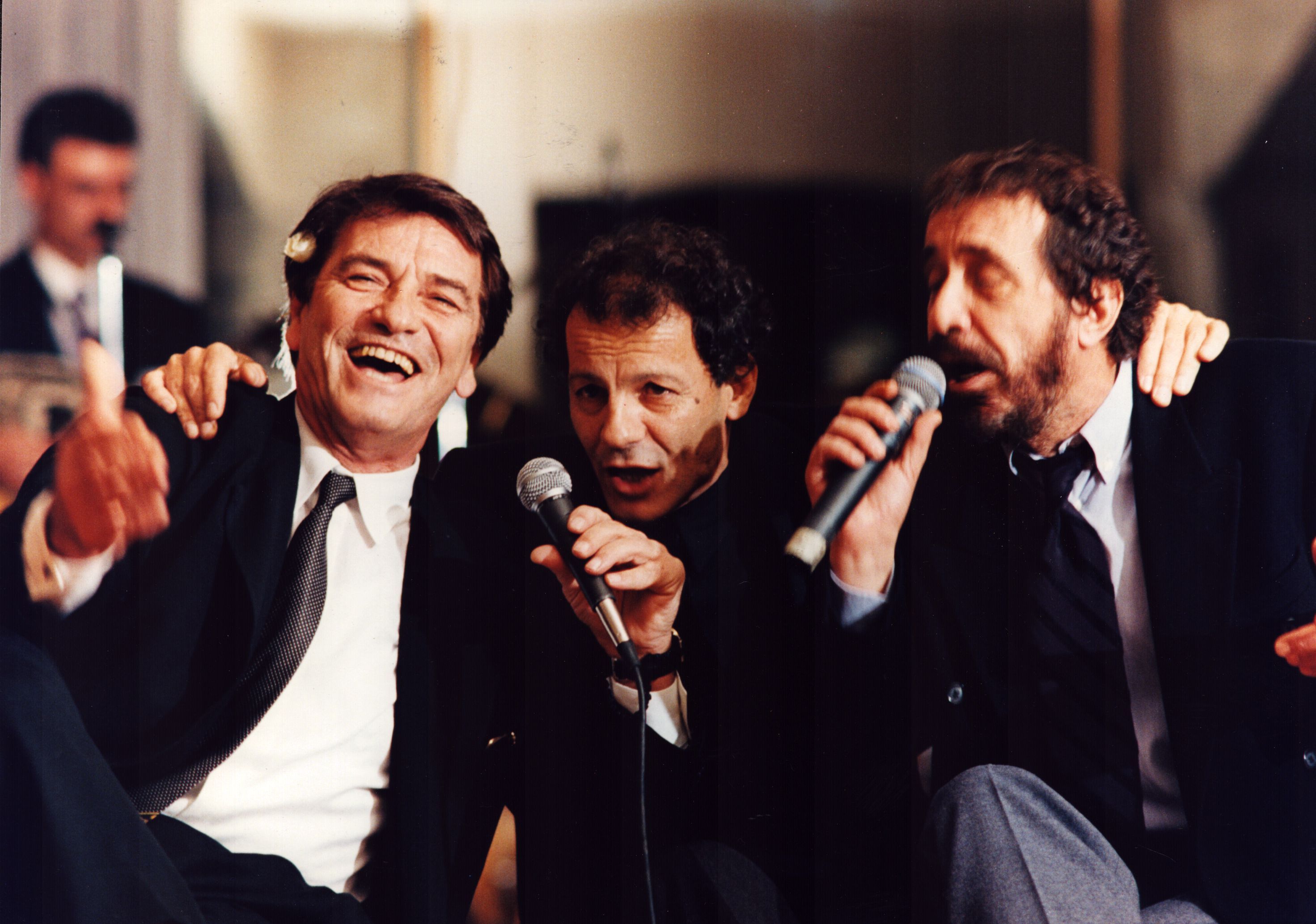
Photograph featuring distinguished figures of the artistic scene.
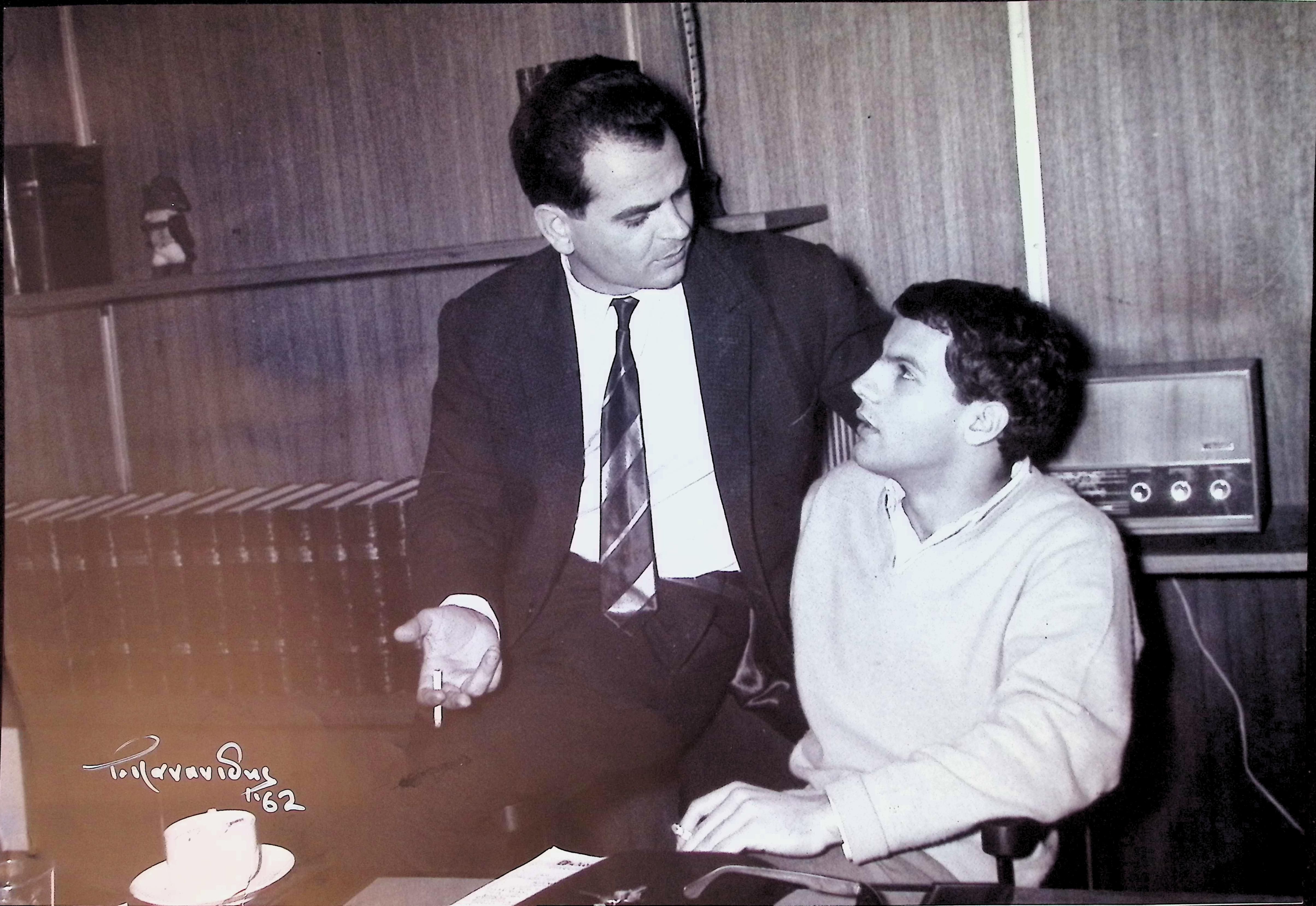
At Columbia, in 1962, Lefteris Papadopoulos meets Stavros Xarchakos. Thus, the first lyrics for “Aponi Zoi” are born.
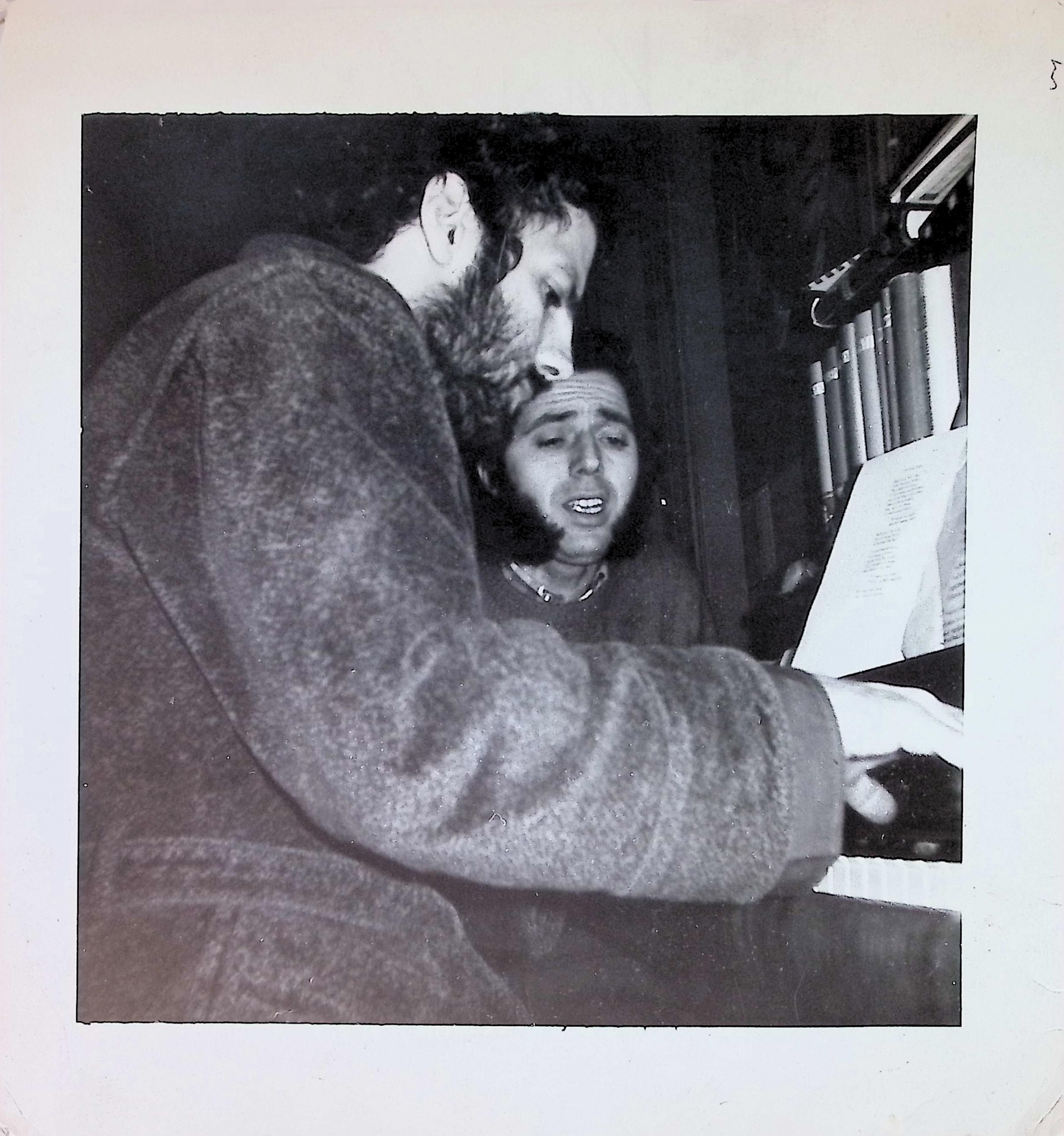
Stamatis Kokotas and Stavros Xarchakos, artists of multifaceted musical talent.
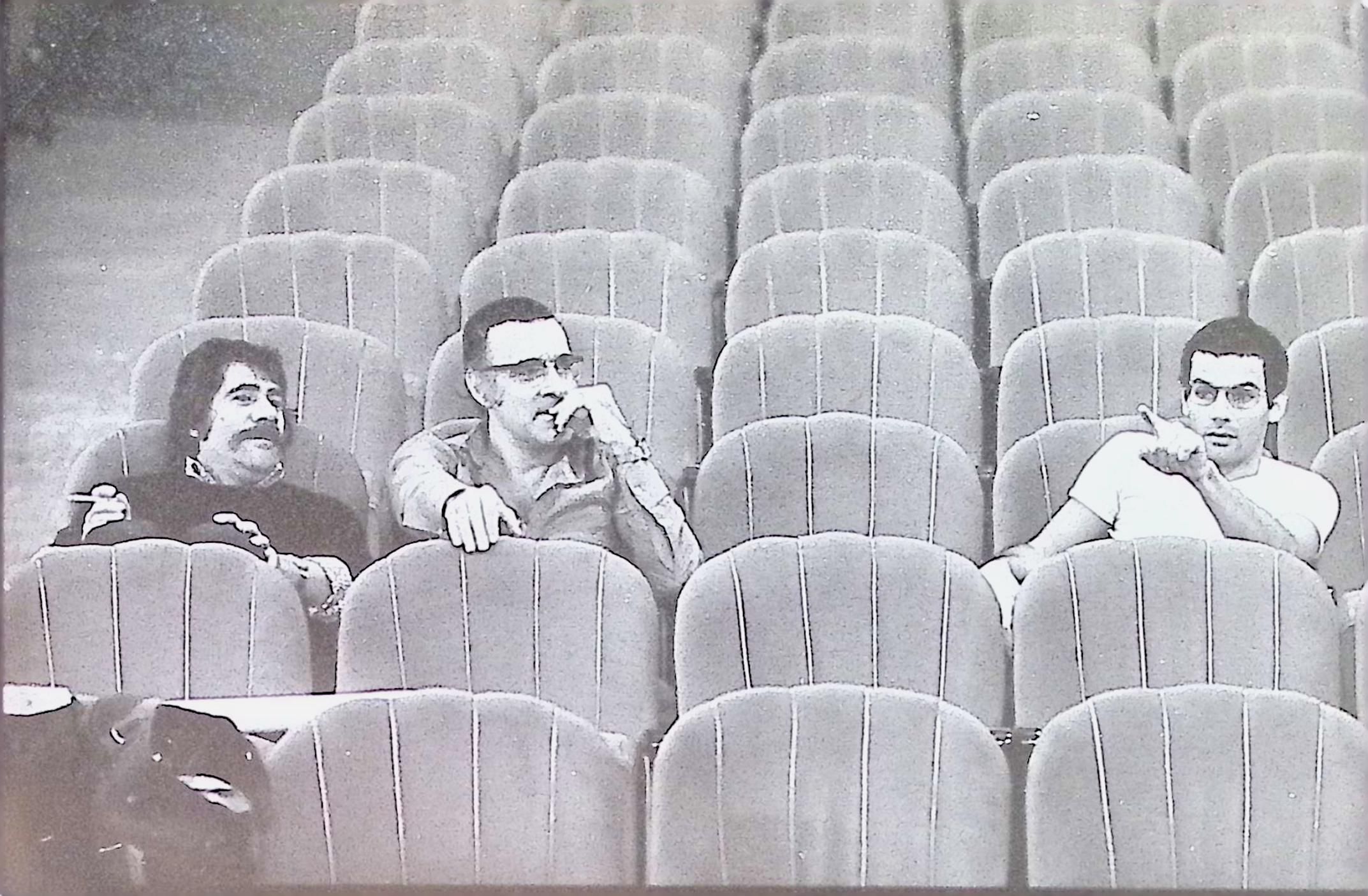
Stavros Xarchakos, Freddie Germanos, and Stavros Paravas in a rare photographic document.
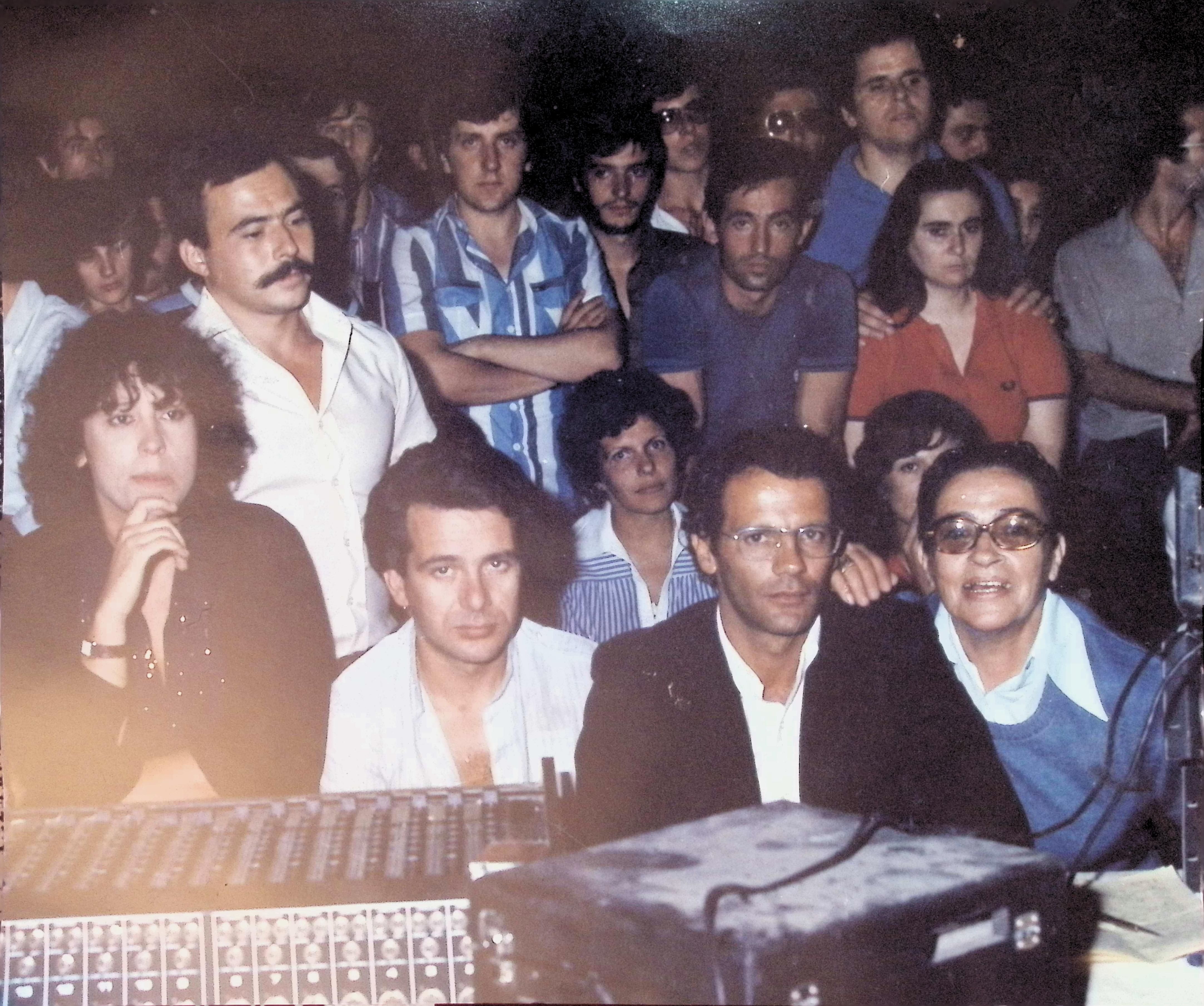
The camera lens captures the meeting between prominent representatives of the Greek music scene and Stavros Xarchakos.
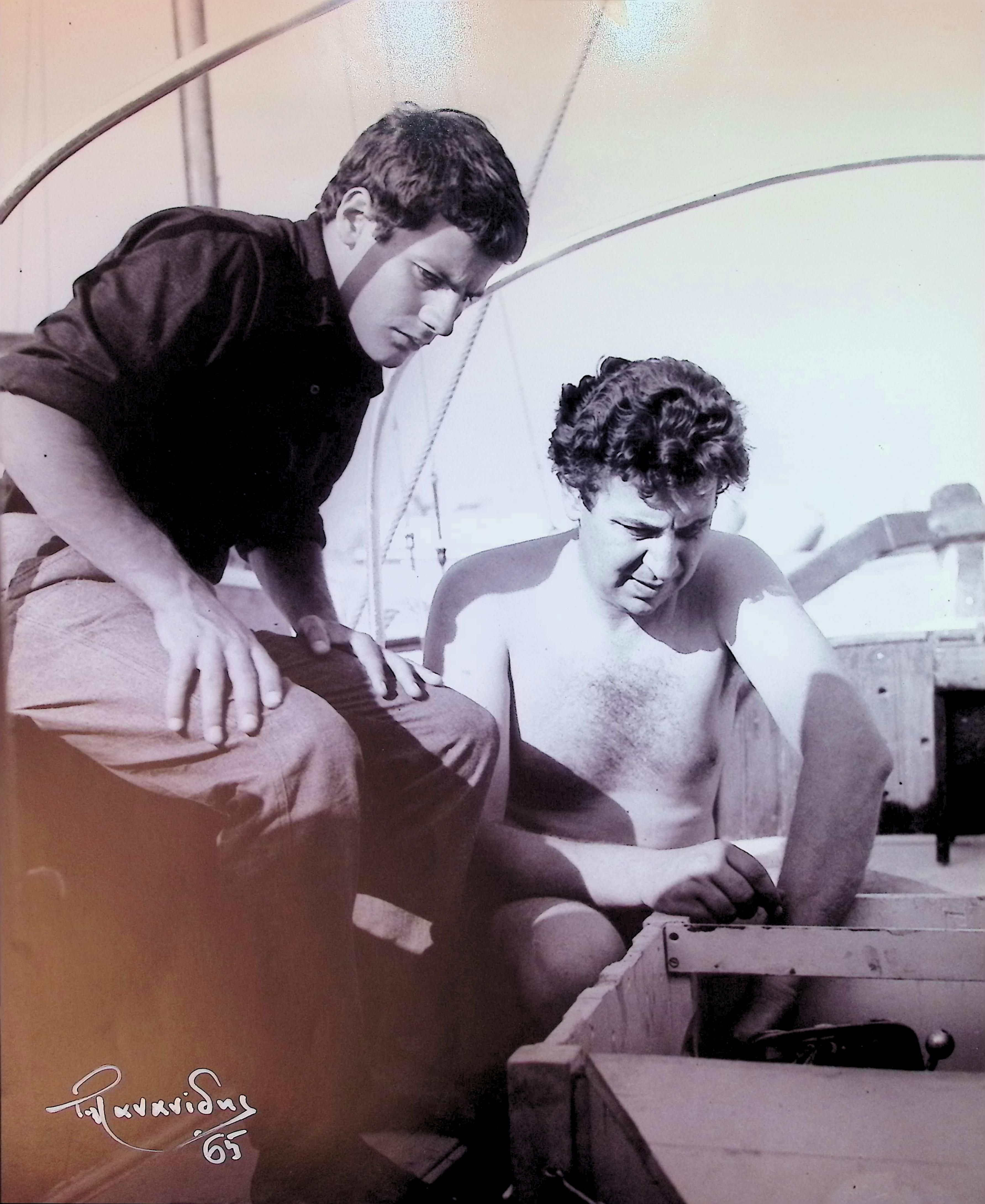
The camera lens captures a different kind of “artistic collaboration” among leading figures of the musical world. Mikis Theodorakis and Stavros Xarchakos, at the Delta Marina, at work on the repair of the “TSOUFI.”
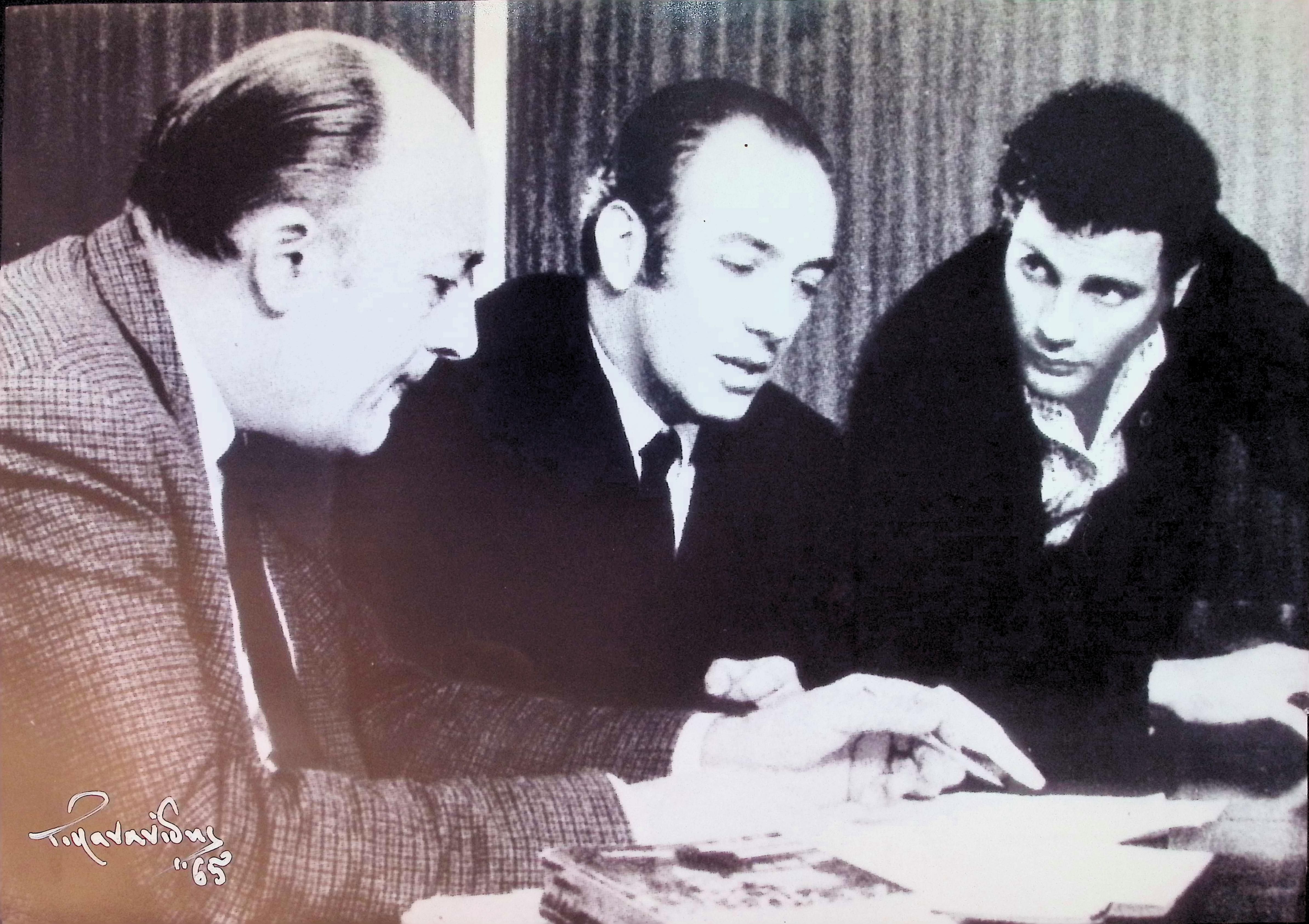
Where the poetic voice of Nikos Gatsos meets the musical breath of Stavros Xarchakos…
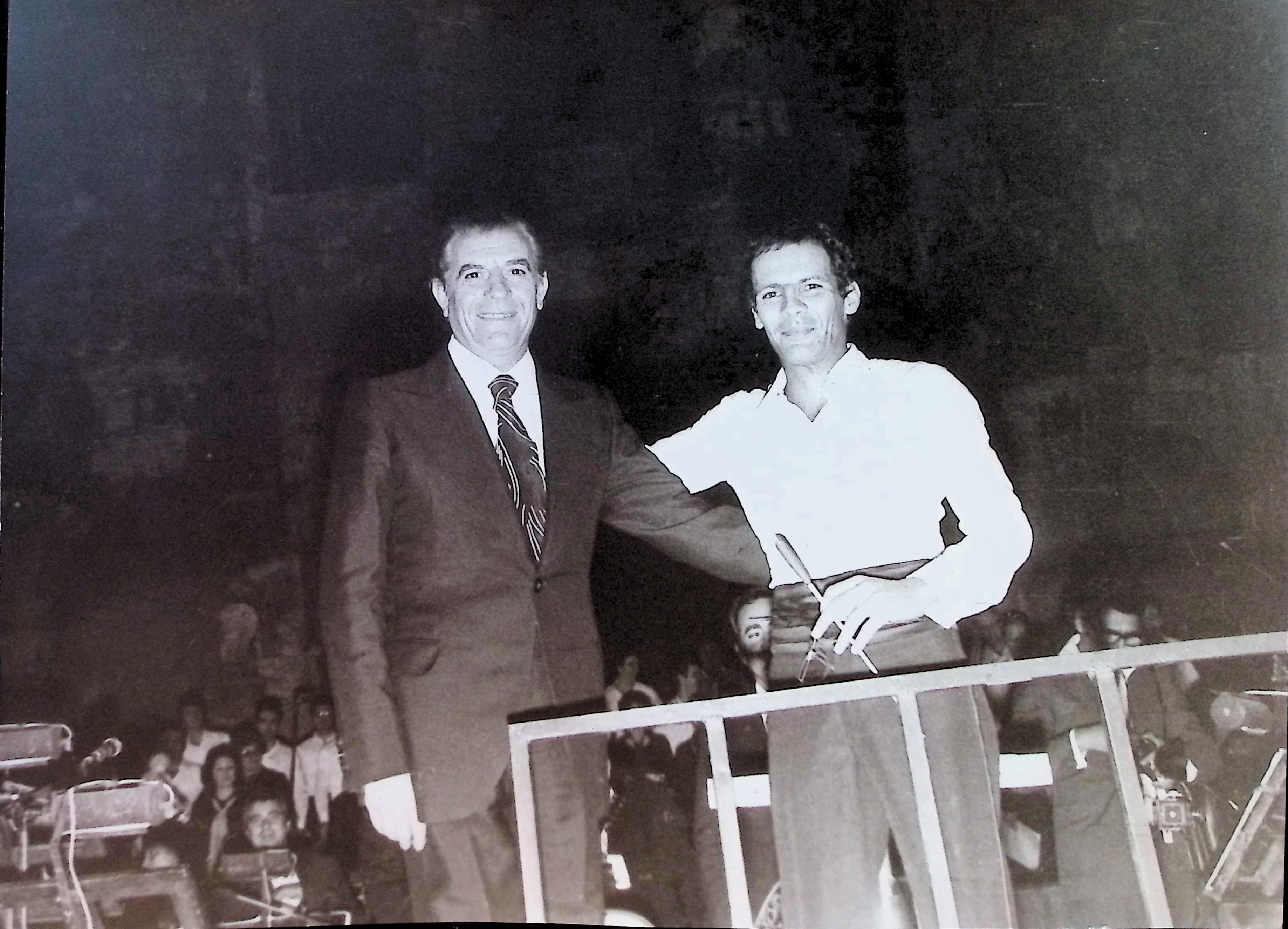
Photograph of Stavros Xarchakos with Grigoris Bithikotsis.
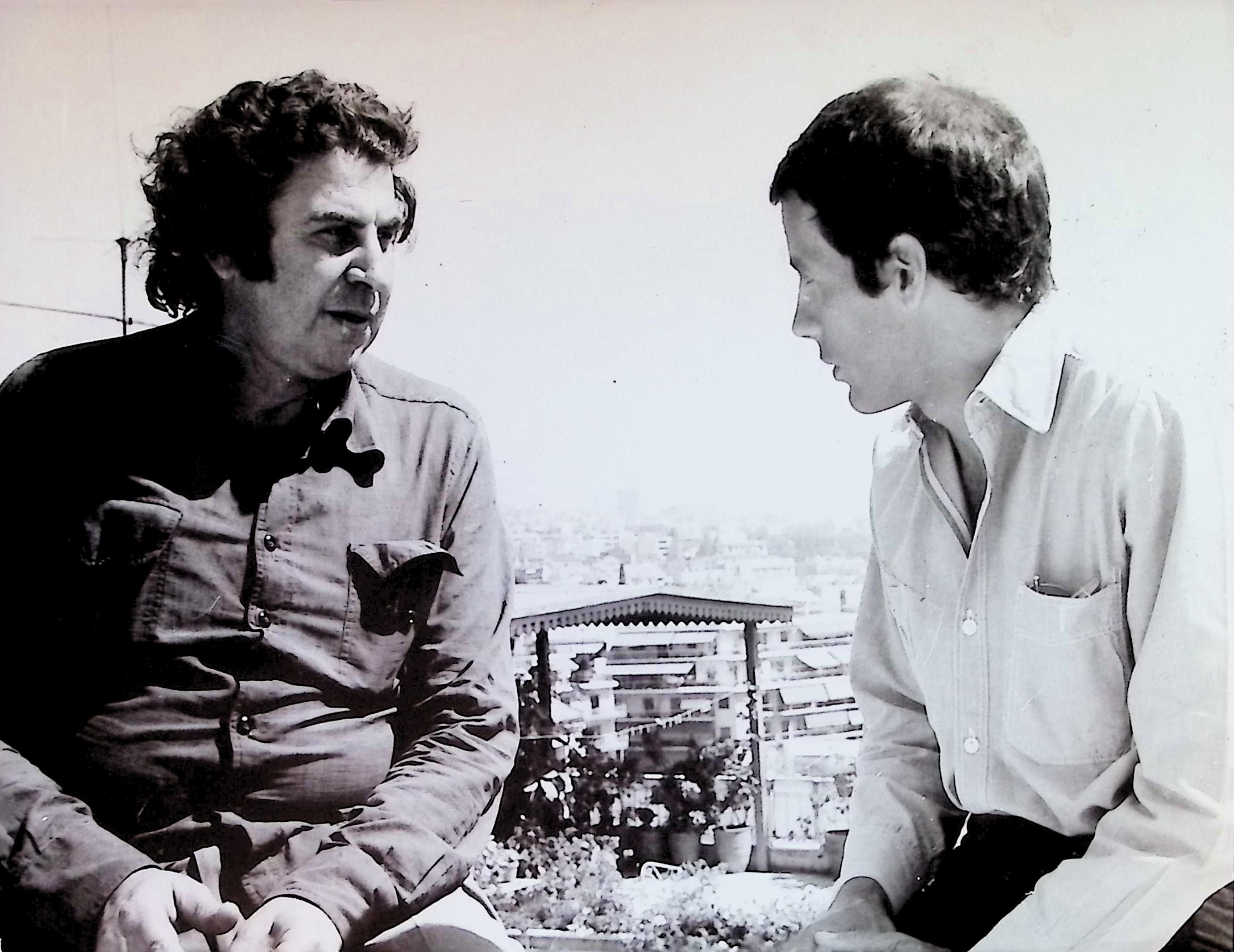
Photograph of Mikis Theodorakis and Stavros Xarchakos, with the city of Athens in the background.
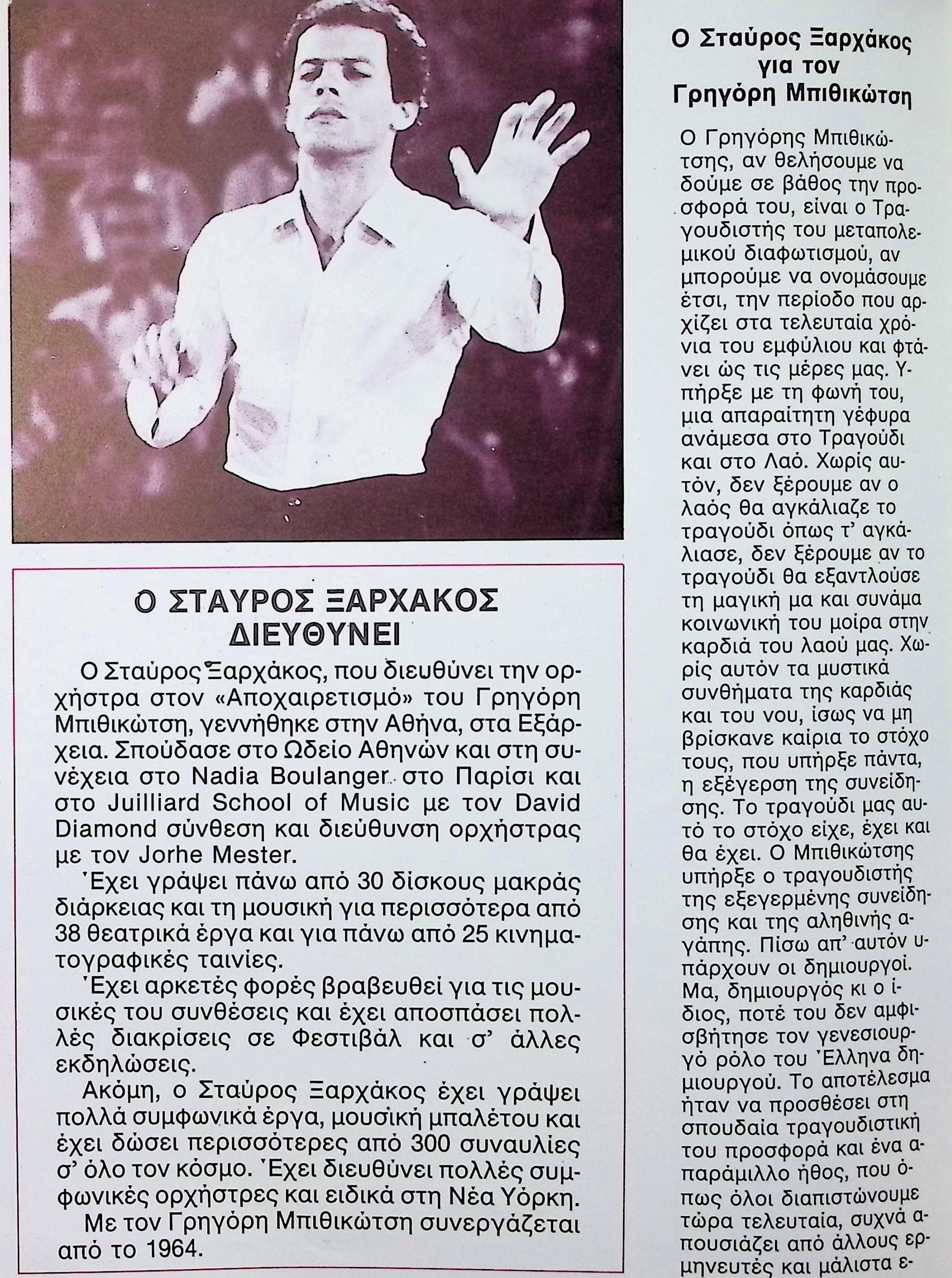
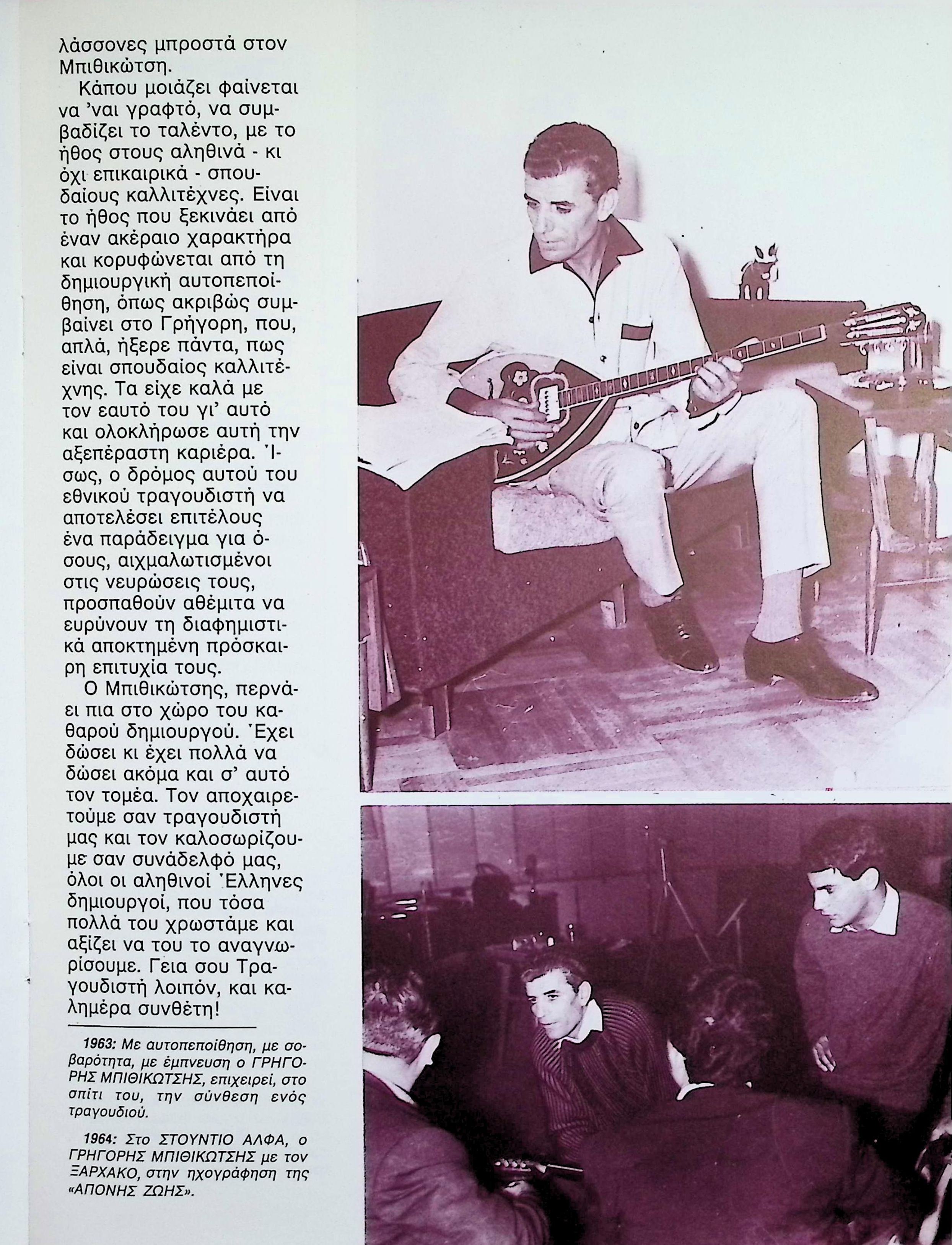
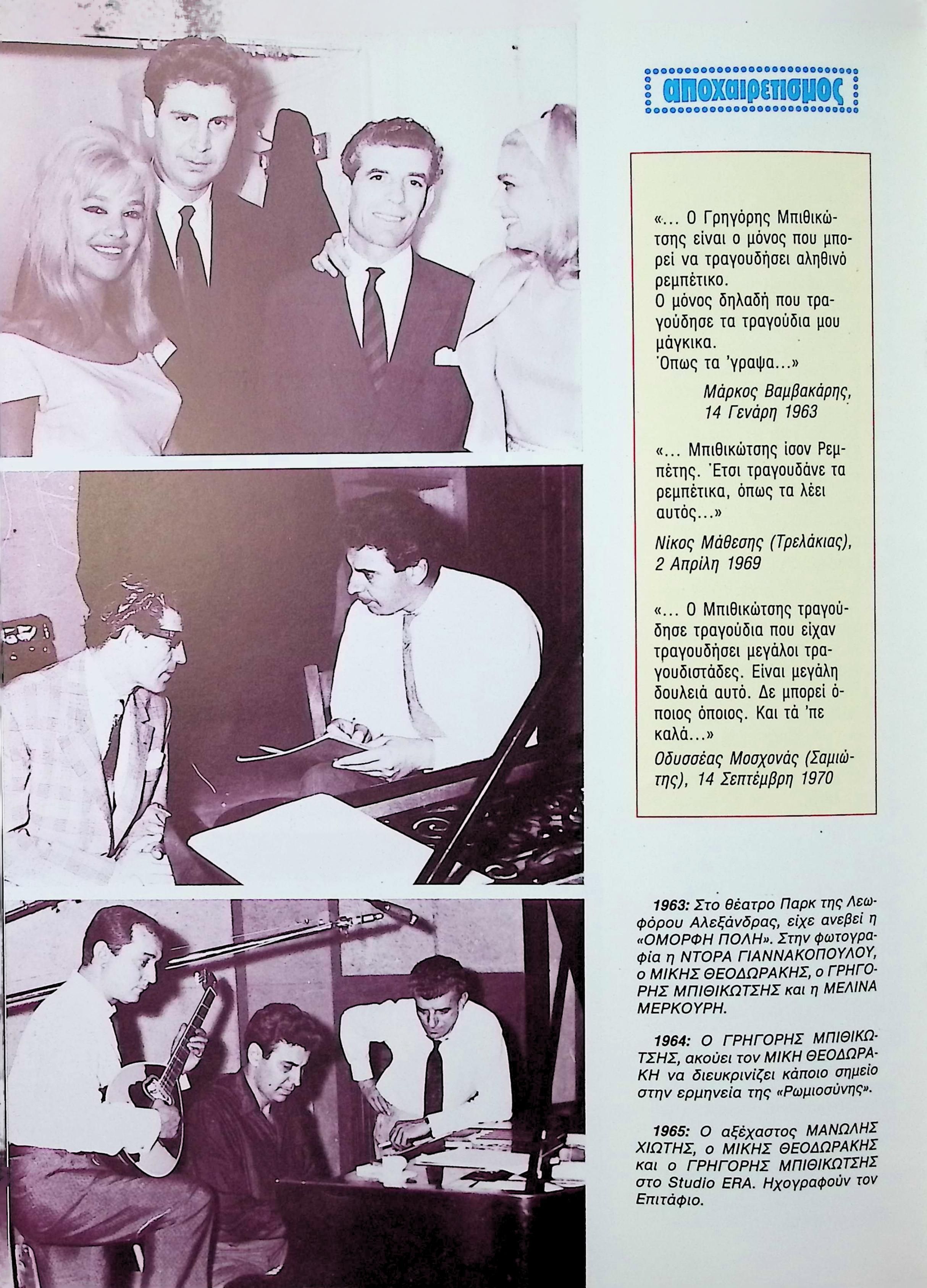
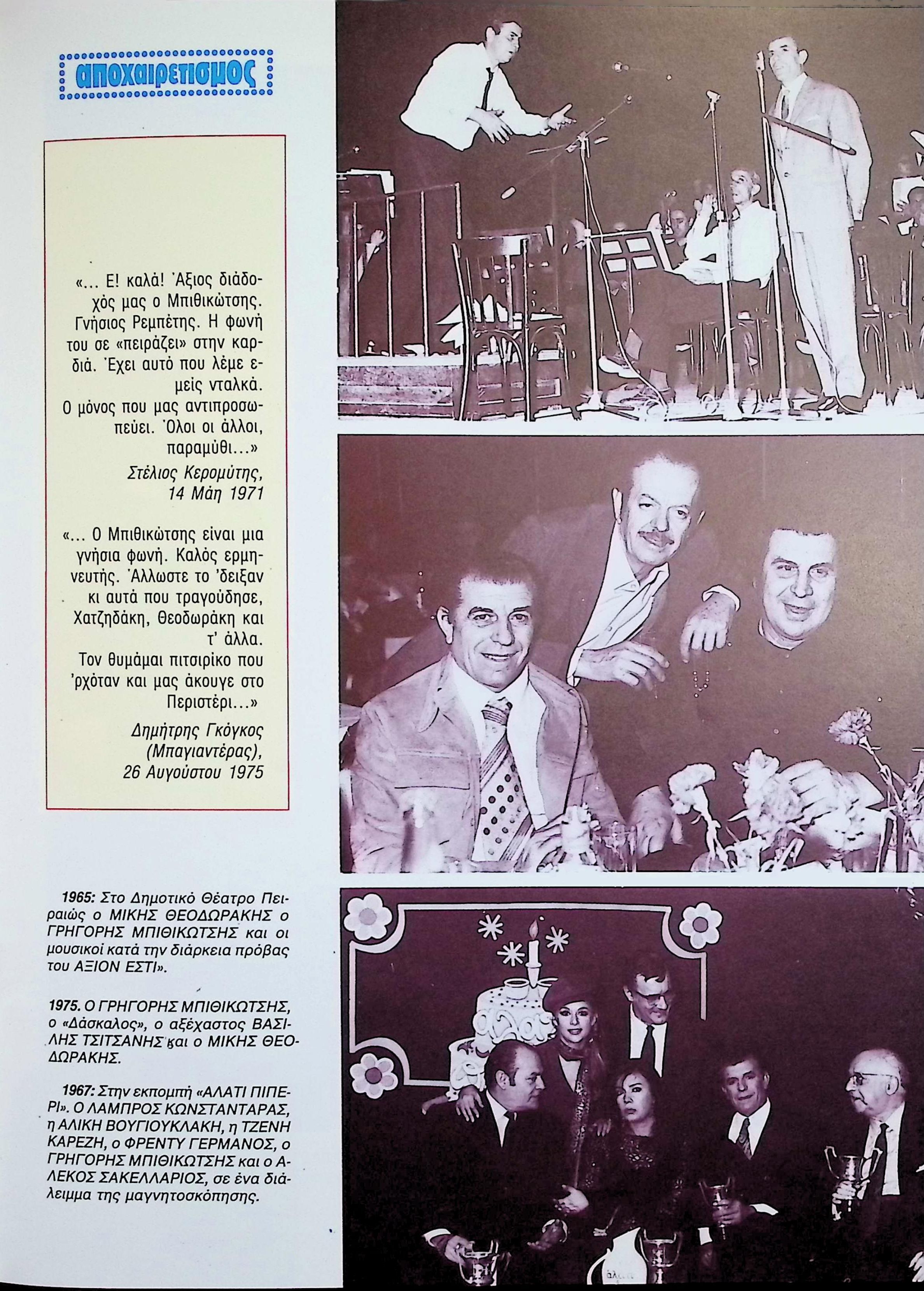
“The Farewell” of Grigoris Bithikotsis. A biographical note on Stavros Xarchakos and his thoughts on Grigoris Bithikotsis in a magazine article. “Bithikotsis was the singer of an awakened conscience and of true love; the bridge between song and the people. Farewell, singer… and good morning, composer!”
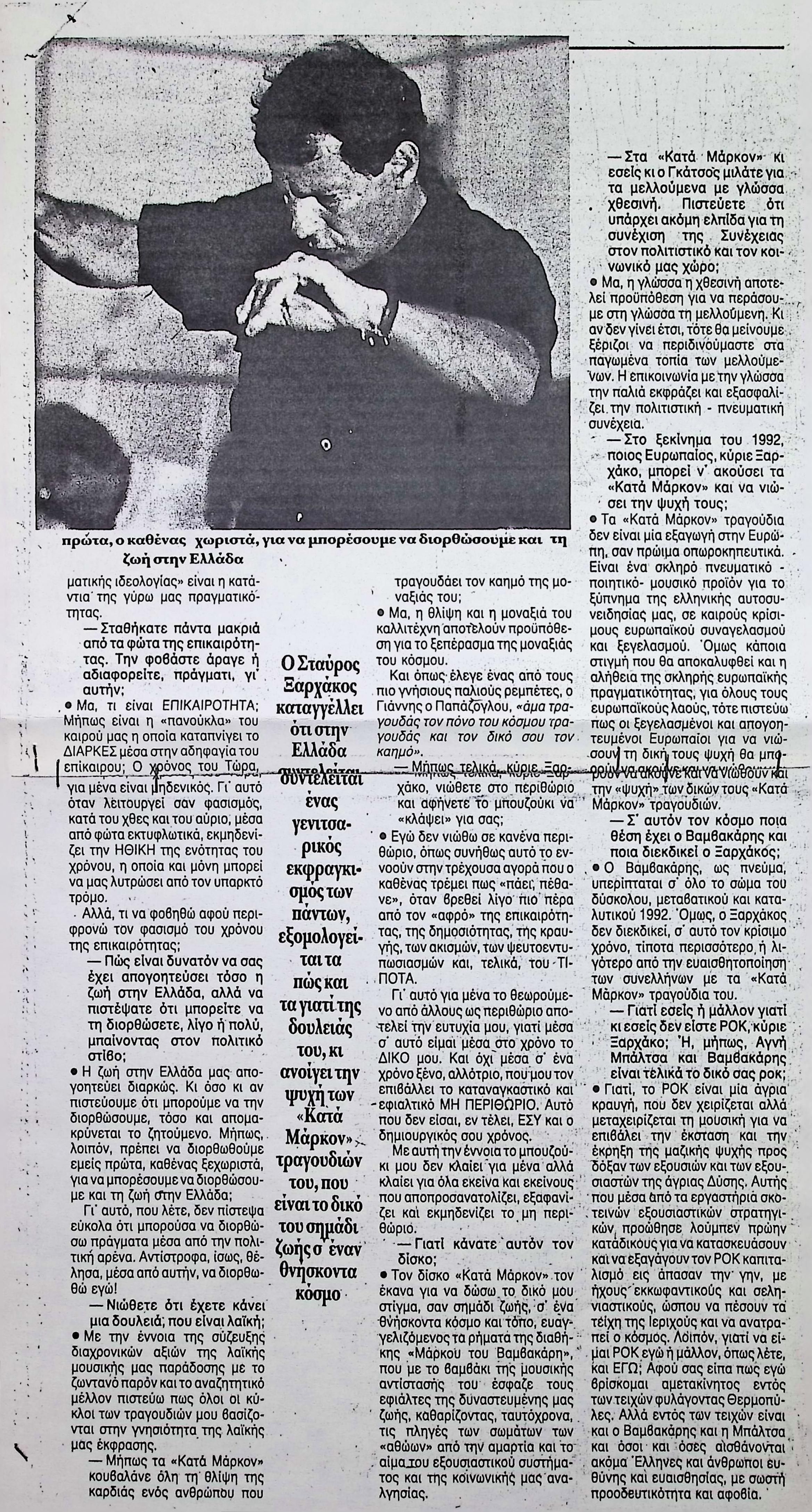
An interview-testimony (excerpt): The reason for the existence and creation of the album “Kata Markon”. Why Xarchakos, Agni Baltsa, and Vamvakaris are not rock.
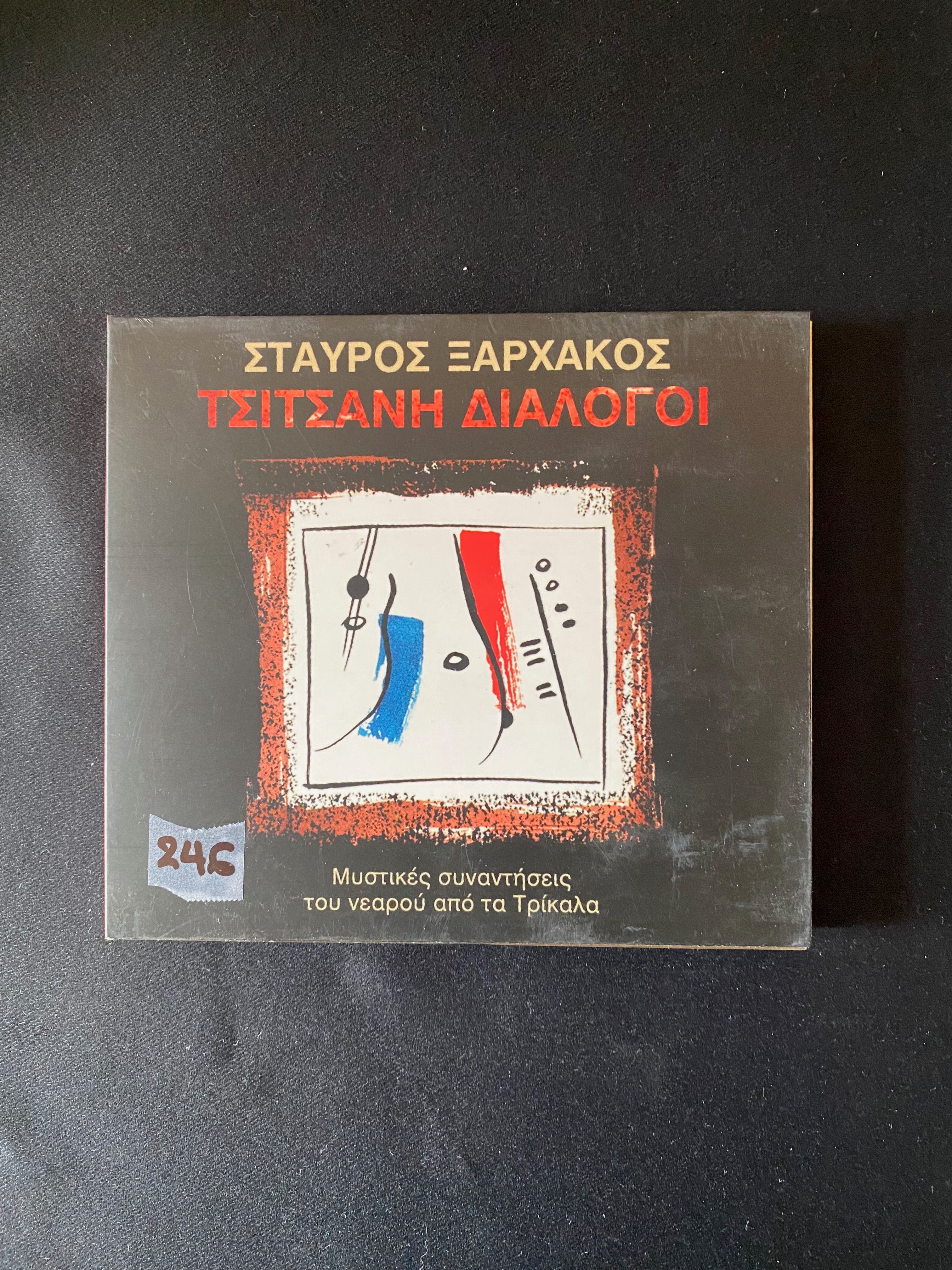
Tsitsanis "... in terms of style, feeling, and harmony — began, quite unexpectedly, to converge at times with great European composers, classical creators; at other times with the folk music of distant places, such as spirituals and the music of New Orleans; and at other times with contemporary musical idioms. A vast chasm separating works of different eras, places, styles, and codes was unexpectedly bridged from time to time through the kinship of their musical soul — that is, their core, their essence. I allowed myself, with the help of the musicians, to listen closely to these musical dialogues, and we tried to bring the surprise and enchantment we felt onto the stage.” – S.X.
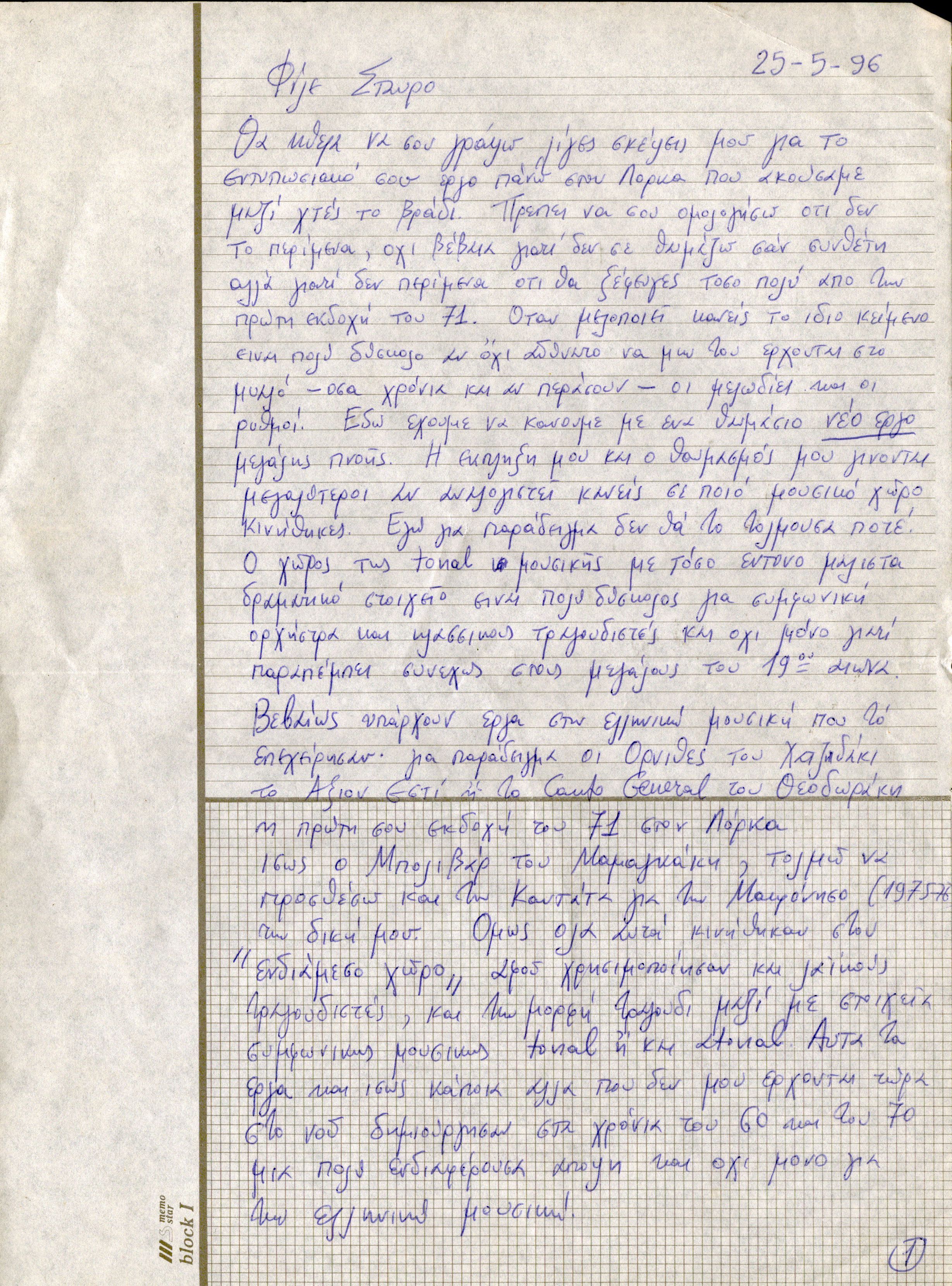
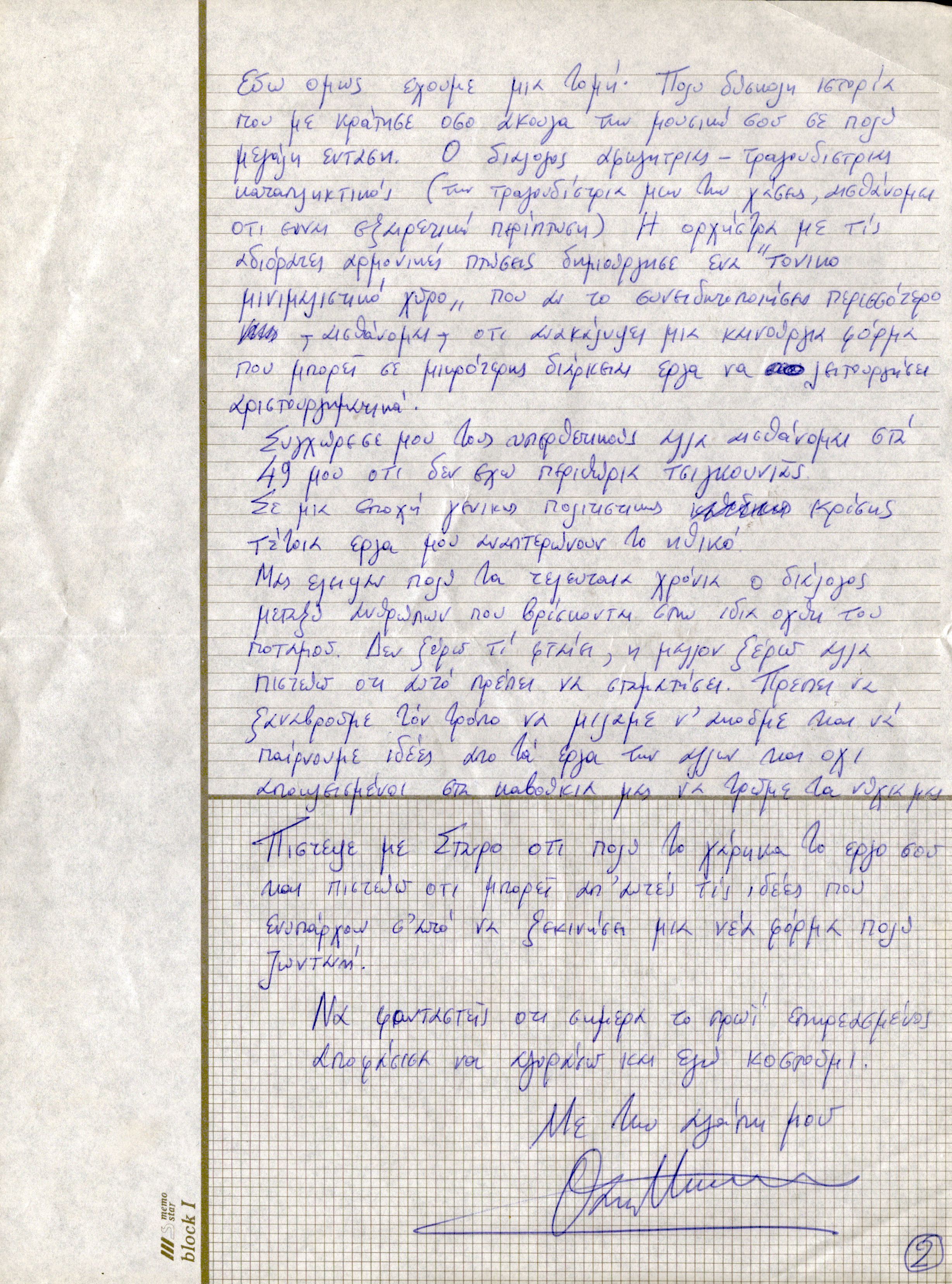
Thanos Mikroutsikos addresses to Stavros Xarchakos a deeply personal confession of admiration for the radical and unexpectedly innovative approach of his new work on “Lorca,” in comparison with the first version of 1971. He refers to the challenges of the symphonic orchestra, the contribution of the performers, the invisible harmonic shifts and cadences, and the vitality of the work.
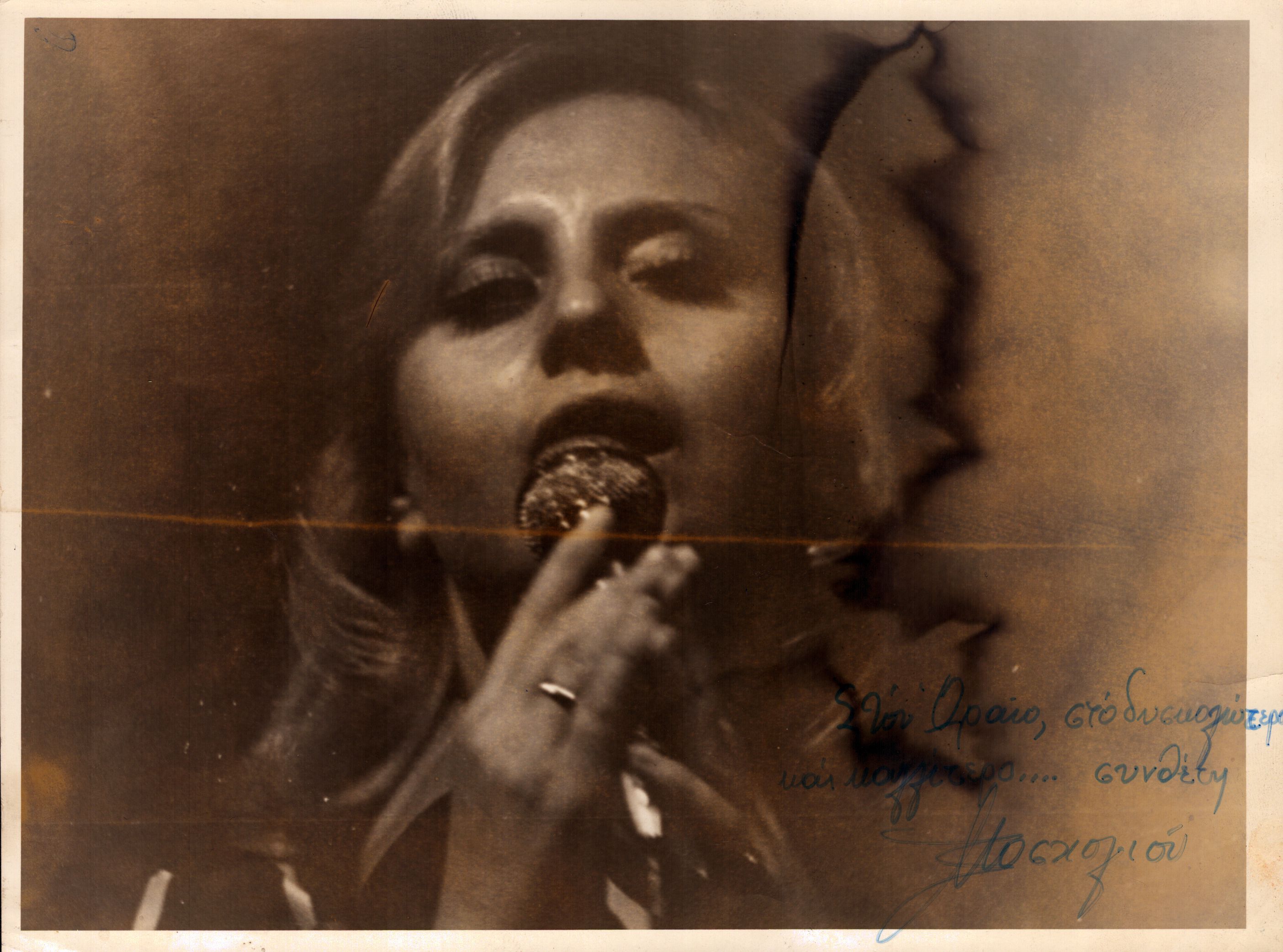
To the most handsome, the most difficult, and the best… composer. – Vicky Moscholiou
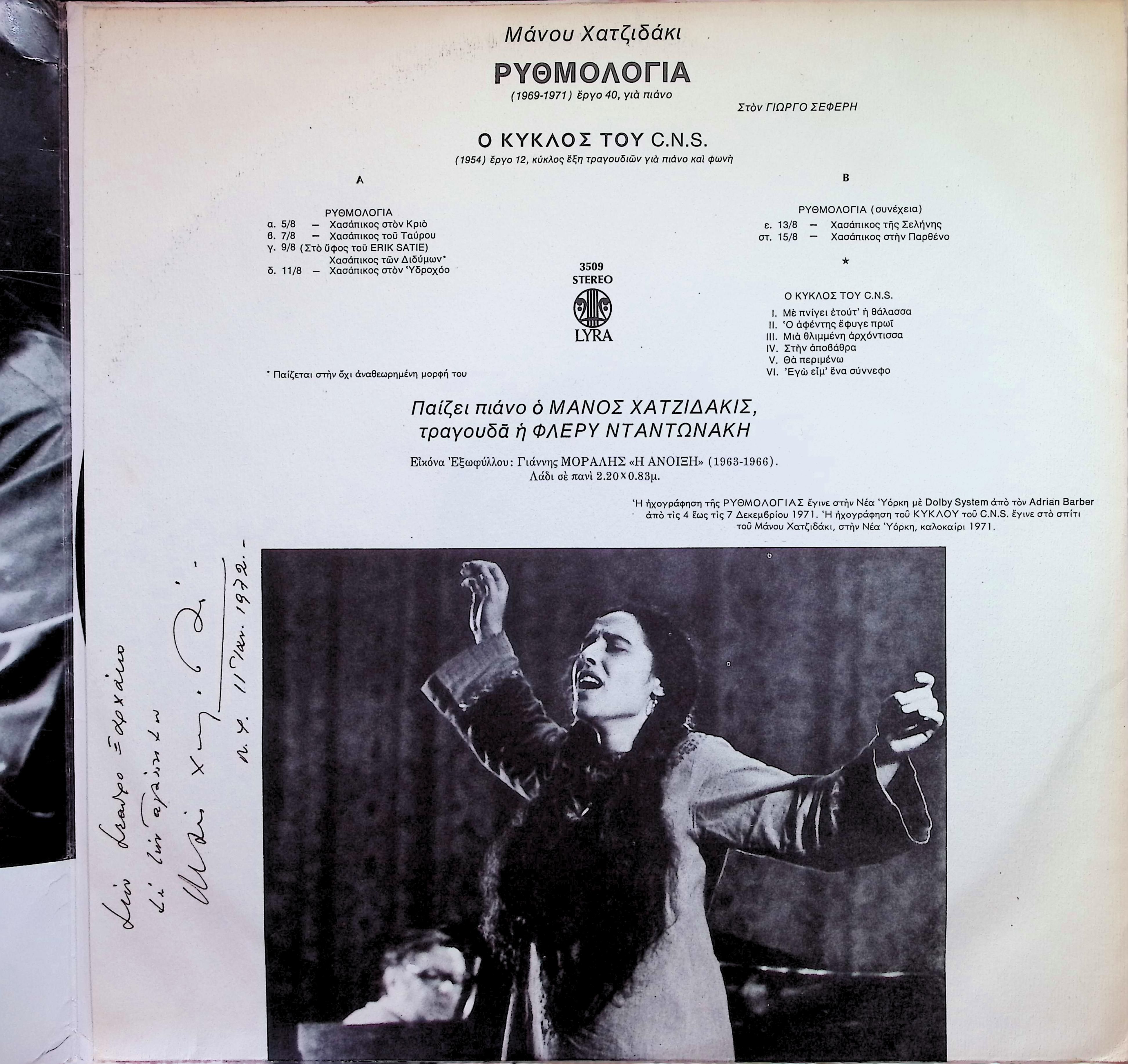
Handwritten dedication "January 11, 1972 To Stavros Xarchakos with my love Manos Hatzidakis" On the back cover of the record, Flery Papadantonaki is visible.
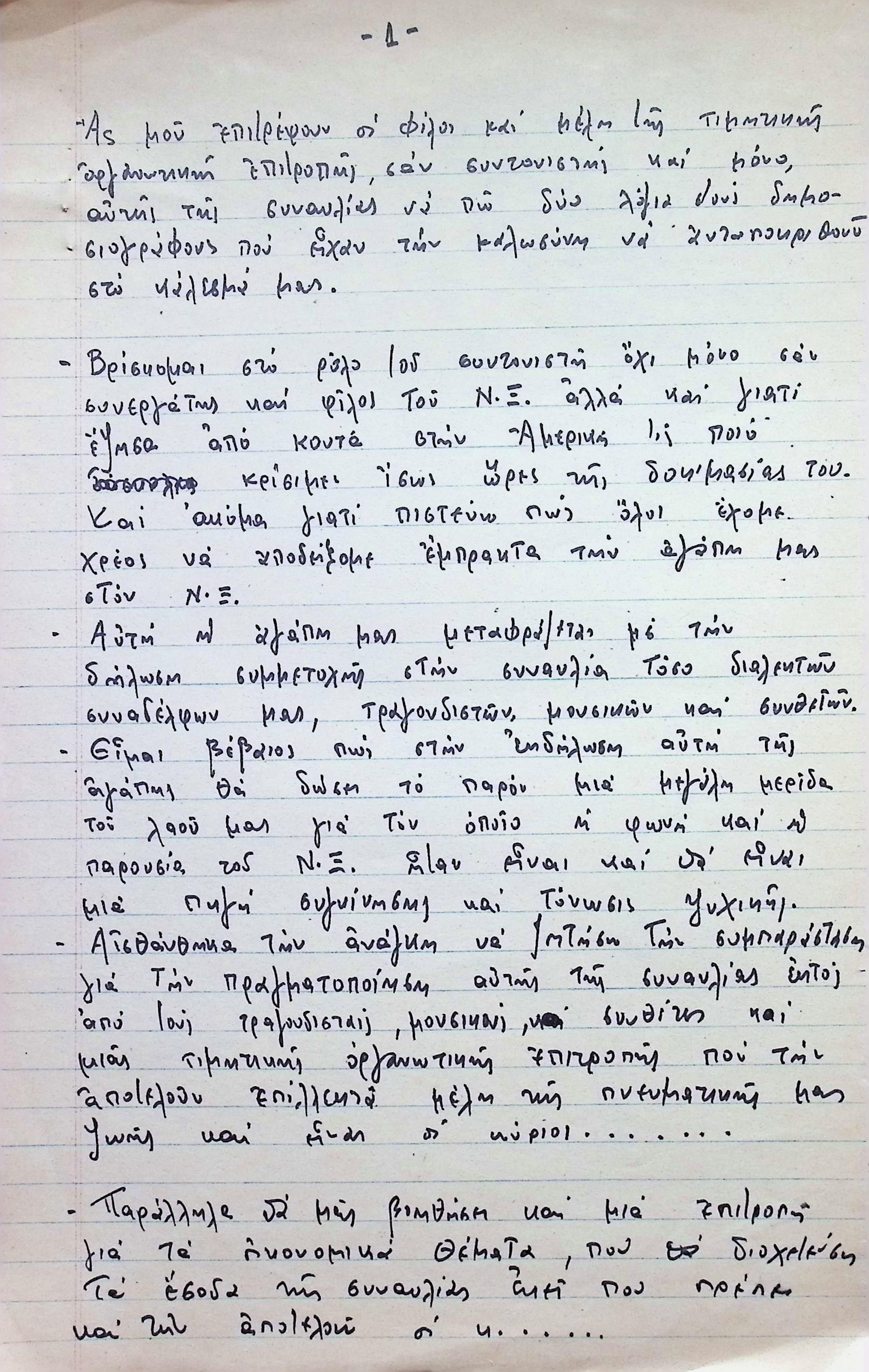
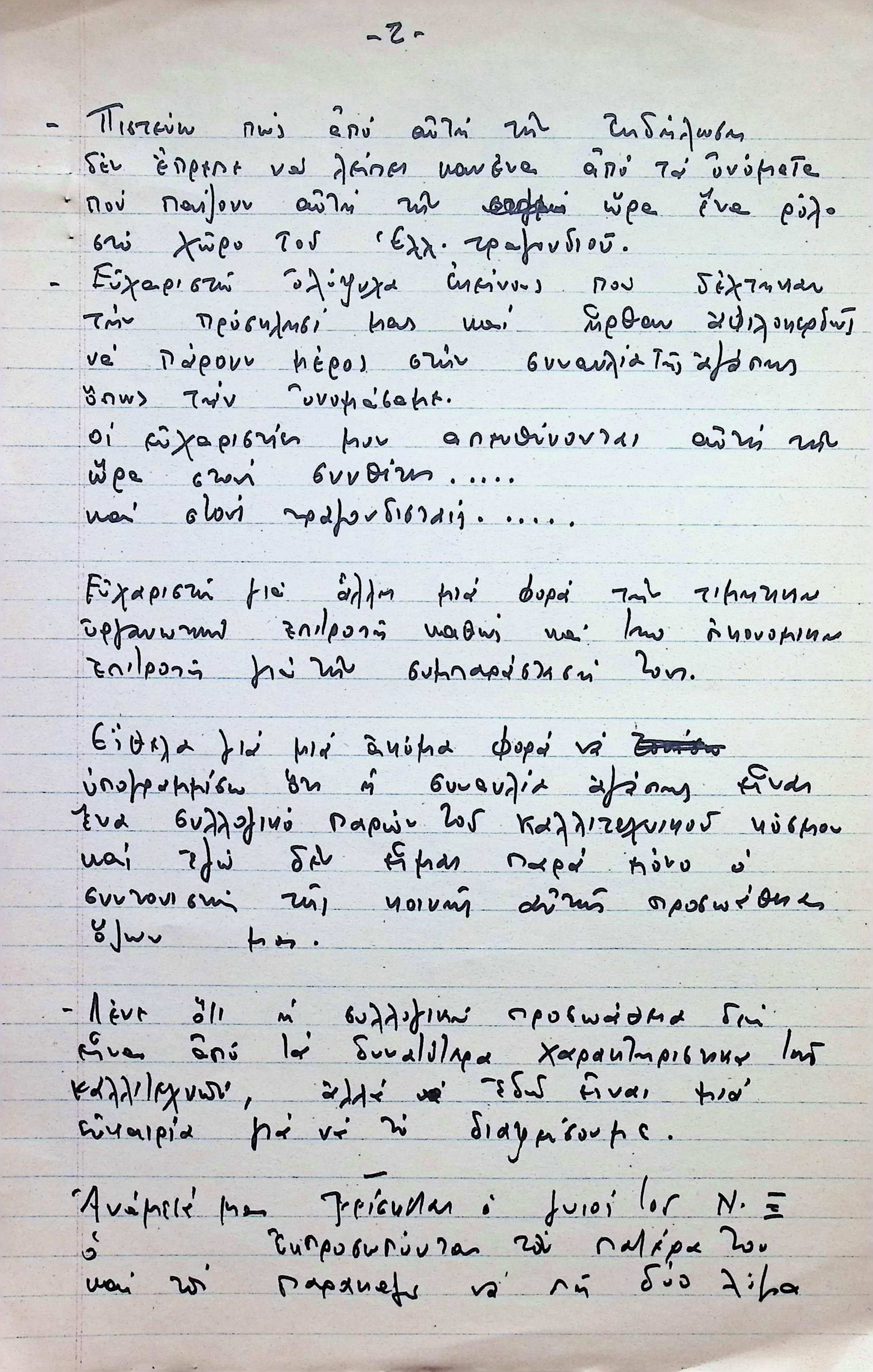
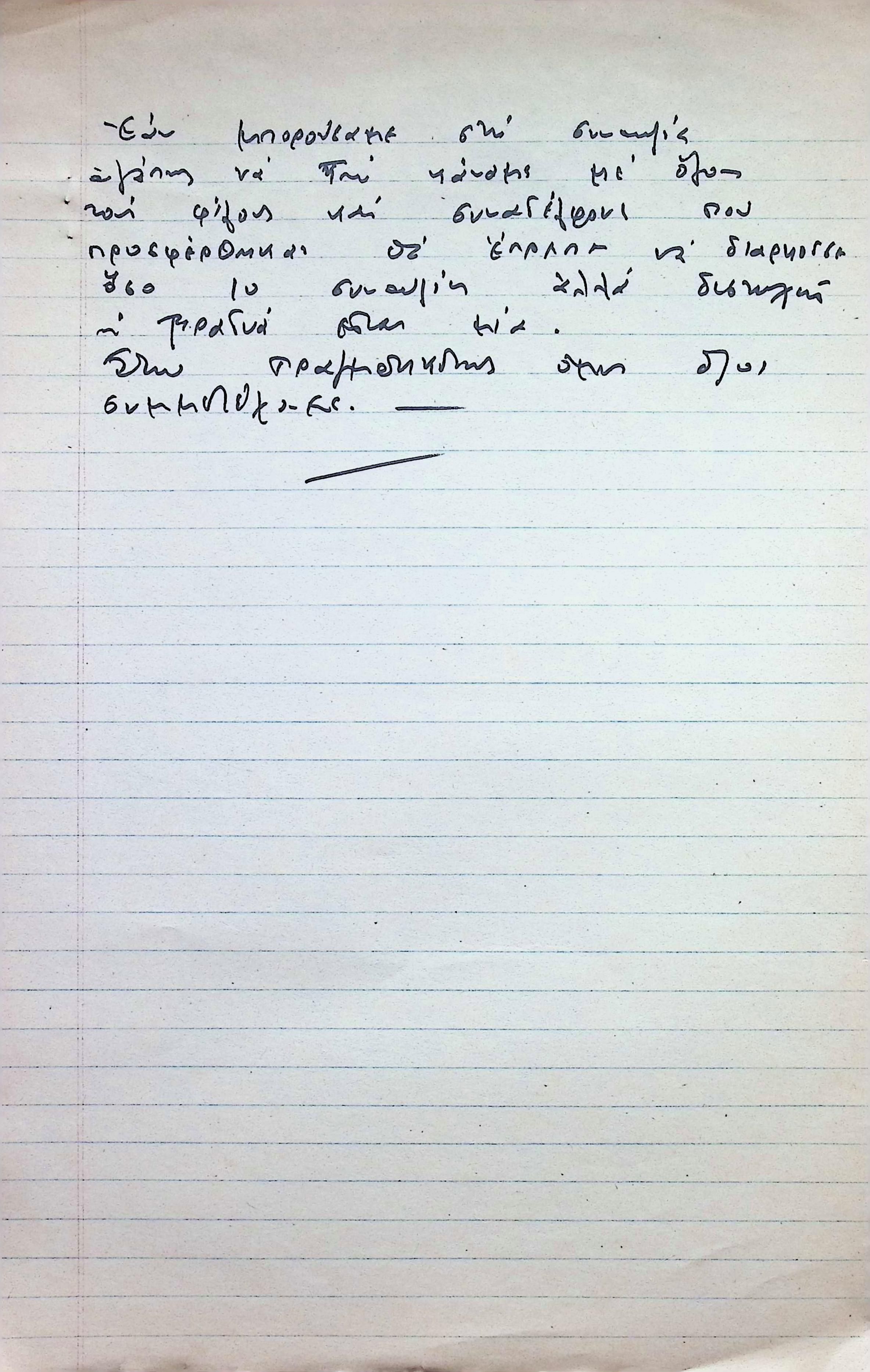
Concert of Love Thanks to the participants (including those not present); also in attendance was N. Xylouris’ son. Nikos Xylouris – a source of emotion and spiritual strength for everyone, a symbol of struggle and dignity.